79. AI at Brinks Home: Lower costs, better customer support (with Veronica Moturi)
Hello, everyone, and welcome to another episode of the security podcast of Silicon Valley. I'm one of the hosts, John McLaughlin. I'm joined today with the other host, Sasha Sienkiewicz. Hi, everyone.
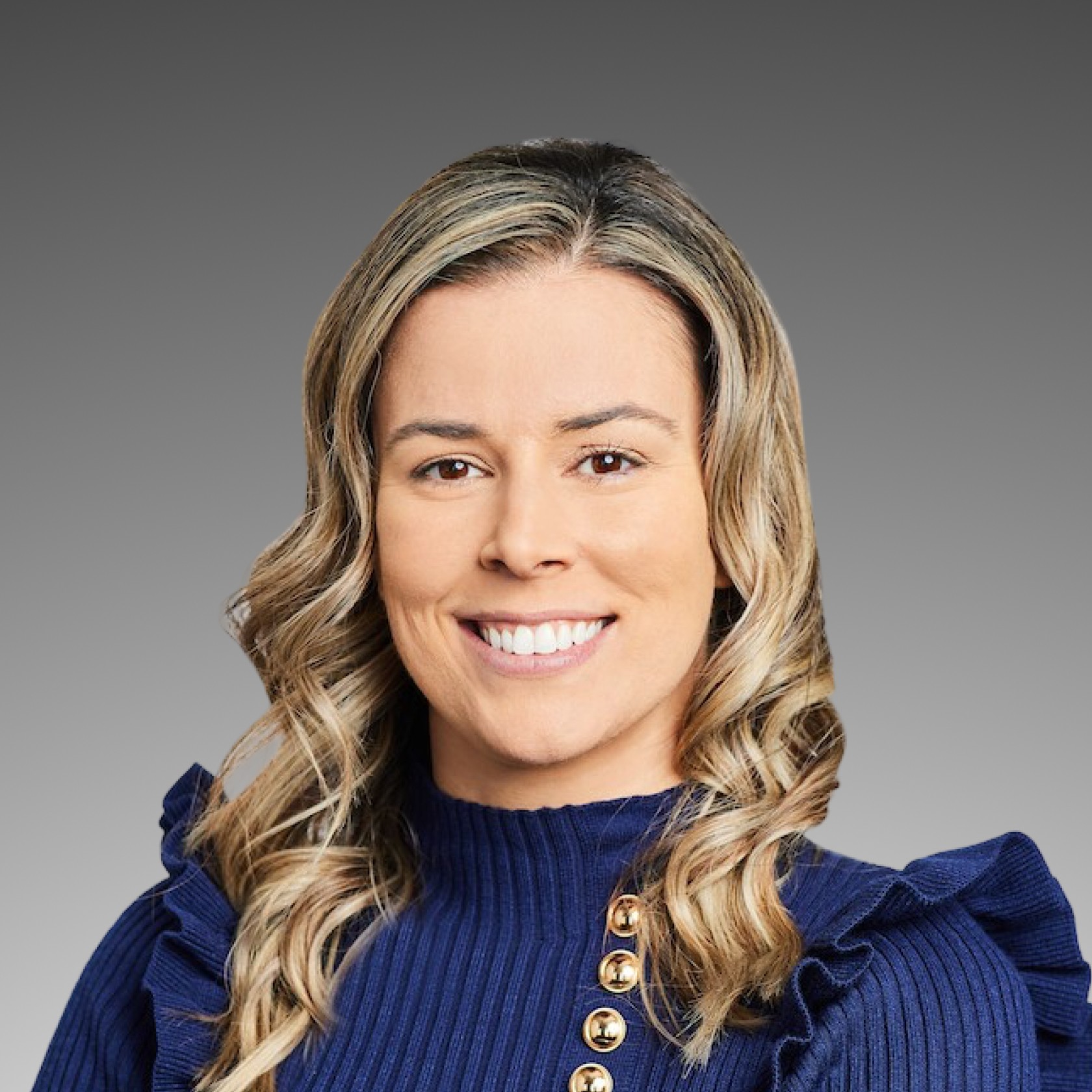
And we have an amazing guest, Veronica Motori, who is the Senior Vice President of Customer Experience at Brinks Home, the security company. Good old-fashioned, let's secure a physical layer. Yes. Yes, mostly residential and small-medium business.
It's great to have you on the show. Thank you so much for joining. Of course. I'm happy to be here.
Would you like to share with our guests a little bit of your background? How long have you been with Brinks? So I will hit my 13-year mark in September. I have been in the industry for about 16 years now.
I've always been focused on, you know, when people need help, you just have a conversation with them, see what you can do and resolve their issues. So it was very easy for me to work in the call center back then and easily kind of stand out from a metric perspective because it came second nature. So with that exposure, I had the director back then come up to my desk, pull me into his office, and it was like, what do you want to do? Well, when I left college, my last choice was business finance because I've always enjoyed math.
So when he brought me into his office, I was like, I want to be in accounting, right? Because I had this goal that one day I would be an executive before I turned 30. I didn't know how I was going to get there. It was just when I was in my 20s, I was like, I want to be rich and executive when I'm 30.
So I told him I wanted to be in accounting. Well, fast forward, I will never do accounting. But that director back then ended up moving to another startup security company. And this is really where my opportunity and career kind of took off.
So when he left, I followed him and he was actually looking for an admin. And so I was like, well, I can do that, right? That's not a hard job. I wanted to get out of the company that I was working with.
And I really liked him. He was a good kind of mentor and kind of walked me through things. But was he the founder of the company? He wasn't.
No, he worked at the original Brinks for probably close to 15 years at that point. He had a great personality. He was very personable, all of that kind of fun stuff. And so he just opened up a conversation of my career.
So I kind of took advantage of building that relationship with him. So anyway, I became his admin for probably a solid six months. And as I was going in there showing him all of these reports of, you know, why certain KPIs weren't being met, he easily found like, OK, you don't need to do what you're doing now. I'm going to go have you work in this other department and manage these people and go help me, you know, fix this issue.
So that was my introduction into managing direct employees. So I was a supervisor. I went from an admin of his to a supervisor. When I ventured over into Brinks Home, he went.
So I followed him again. And he was like, look, we need somebody that can handle this complaint department and take our Better Business Bureau rating to an A plus. And I already had an established relationship with the Better Business Bureau. So I started as a manager here, managing a team of about 15 people that handled complaints and got the Better Business rating back up to an A.
Fast forward, it's just been year after year, I've been given more and more responsibility, which has now propelled me to basically be over all of our customers, whether it's technicians, frontline agents, our retention strategy, chat, you name it. Anything that's customer facing outside of sales is underneath my org. And we know that trust is super important for a security company. Why is customer experience is also very important for a security company?
I'm a big advocate of customer experience starts with your employees. So no matter how good the company product is, no matter how good the marketing is, at the end of the day, when you're in security, it's the person on the other end of the phone that kind of has your family and your house in their hand. And so they have to keep focus and attention on everything that's critical in that moment to ensure that we do our part to keep their home and their property secure. So when you think of trust and you think of customer experience, it all boils down to the frontline agent and the agents that are working at the company that really drive the best experience.
People think it's the opposite, right? Customer experience is the customers. No, it's a product of what the employees actually provide to the customers. I totally get that.
It's the extension because that's what it means to scale, really. You have to take the experience. You have to take the idea. You have to take what the brand represents.
And the touch points between that company and all of the customers, especially in a B2C. Yeah, it sounds like there's a little bit of B2B in Brinks as well, but that has to scale. And as we're interacting as employees of a company with our customers, that shows that's the image that you're going to be left with. That's the feeling.
So that makes total sense. Yeah. And I love the comprehensive approach. Yeah, I mean, it's definitely because we're a security company, right?
You have one first impression and that's it. And so each critical touch point that goes throughout that customer journey, our company has to be aligned on what's most important. But then our actions also have to do that. And so as I've grown in leadership and as I've gotten more and more mature leaders under me, that kind of mantra and mentality and our culture that we have is rooted on that.
So our foundation is very much set by its employees first, then its customers. And then it's your pillars of whatever you're trying to drive and scale, revenue, cost, attrition, what have you. But your foundation is set first on your employees and your customers second. No, I love that.
And so taking care of people that are in-house also is a way that we take care of our customers. Yes. You know, it sounds like you've had an incredible journey so far and you're still already like so very young and you'll have like lots of experiences. But up to date, up till right now, has there been anything that has kind of happened that you have been like surprised by?
And you're like, oh, no, like, how are we going to recover from this one? And then and then you've been pleasantly surprised and you've just been really proud of the people around you and and how the situation was handled. Yeah. So Brinks has been going through a transformation for four years now.
And the transformation has been how do we continue to evolve with technology, leveraging any kind like AI, efficiency gain technology, things to make people better, smarter, etc. And all of that focus has become the Brinks culture of what we're our North Star is. How do we increase our customer experience but lower our cost to serve? Right.
Everything's unit economics. Everything's about doing the right thing. We can easily make customer experience great but blow out the budget. And vice versa, you can easily lower costs and make a really crappy customer experience.
But we have been very deliberate as a leadership team to say that's too easy. And if we want to do it, we have to do it right. It's by balancing both. So over the past year, we have been transforming into artificial intelligence and large language models.
And so one of the newest things that have fallen onto my plate is how do I create a virtual assistant that is equivalent to the experience that my frontline agents are to help improve our experience and lower our costs? Well, if you think about that, a frontline agent does not understand what that truly means outside of, oh, it's going to take my job. And so that has been probably the biggest hurdle is I've got over 300 frontline agents. I have, you know, 40 plus leaders that are managing people day in and day out.
How do I get them to grasp the future of the company and this vision that we have without being scared to take on AI face forward? And how do you communicate that message? Very transparently. You're either on board or you're out, right?
You have got to figure out how to have AI become your best friend versus your enemy because that's where you become replaceable. There's people out there that are more than happy to embrace technology and do the job we're doing today. If you combat that, then I don't see how you make it a year to two years from now because it's not going anywhere. And if anything, it's aggressively getting faster and what's being accessible in the world and how we use it.
And so I'm an extremely transparent leader. Doesn't mean I tell all the details of what I get in the boardroom down to the frontline agents. But as we strategize and as we pivot to do things differently, it's very important for me to be the voice for the overall umbrella and then have my team continue to replicate that message. And the goal is to improve the user experience.
And LLMs have this excellent talent of swifting through a big volume of data and figuring out what is actually important. And that can actually assist your frontline agents to deliver better quality services to the customers. I grew up in a Brinks home, so I'm very familiar with Brinks as the brand. And we had the little keypad on the door next to the garage and it always felt very safe.
And I always appreciated it. Like if we ever had an accident, there was people, there was times when like, I don't know, a neighbor would come over, didn't realize. The security system was on, open the door and then the thing goes off. Yeah.
And then you get the call. There's always a human being. There was no such thing as like automated phone systems back then. And you had a friendly conversation and they just wanted to make sure everything was okay.
Yeah. And I always felt, it always felt very, very good. It was always a very positive experience. So.
Good. And I'm sure, you know, just thinking through those childhood memories of like growing up in a Brinks home and understanding how LLMs operate today. I could see how like you would, you could really accelerate a lot of things because LLMs are just, they're so good with like massive amounts of data. And I imagine that, you know, centralizing operations and, you know, all of those, all of the monitoring of all of the homes and all of the small businesses, that's a ton of data.
Tons of data. And you mentioned your team was what, 350 folks. So. Yeah.
And just being on the very front lines of, of LLMs and the intersection of LLMs and security, I don't see this stuff taking anyone's jobs. Like it will make people faster. Yeah. Right.
Yep. Yeah. Not only faster, but it makes you more accurate because then you can pull all that data together and make a distinct decision without trying to funnel through multiple screens to decipher what to do. So accuracy is probably the biggest benefit.
But if you're trying to explain this to your customers of why it's okay for a security company to embrace AI and technology in that sense is because you're pulling together so much of that data and content and then giving it to a human to make a more sound decision than reacting in the moment of, to your example, my front door is off. Well, what if I knew that you were home? Right. I mean, there's cell phones, there's cameras, there's all this technology of verifying certain things before you actually act and make it more critical in the sense of, you know, dispatching police or the like.
Right. Exactly. Exactly. You mentioned a lot of different types of data that goes into this decision-making process, whether or not there is an incident or whether or not we have to investigate further by involving AI agent and then frontline human agent.
It means that your customers share a lot of sensitive information with the company. How do you continuously build that trust between the home, things that happen inside the home? It could be video, it could be audio, and just analytics about the behavior of people that are part of that safety net that brings HomeProtect and the company itself. I think first, you have to be very upfront and transparent on exactly what information you're pulling in and using internally that's the customer's proprietary information.
So their consent, as we go deeper and deeper into data and technology, is number one. And foundationally, you've got to have a really good cyber team and an IT team to secure that data, right? We don't want to be like, you know, others that you've seen in the news where that information gets, you know, disseminated from an ex-employee or something like that. So your controls and security and your redundancies for that data and access points are critical outside of getting your consumer's consent to leverage it.
So I would say those two are probably most critical. And then realizing that data has to be understood on how to use it, right? The term analysis paralysis, right, could be very easy as you continue to get more and more data trying to find an answer. You have to break it down to what becomes something that's intentional that can take action.
And that is some sort of layman's term for the user to understand what it means. So the data mining and the data, you know, classification and indexing and stuff that has to be done is very critical. That way it's just not used in an unorganized way, I guess is how I'd say it. 100%.
And in general, there is a lot of noise in data because, as you pointed out, the more data you collect, the more volume of unprocessed data you have. And it's important to identify, OK, so this is type of data that makes sense connecting with this type of data. And this is where LLMs and SLMs do give you a lot of benefit in connecting the dots. Right.
So I'm super curious. Who Insight Brinks had that insight? Did you bring that insight to the table of like, hey, here's AI and here's LLMs and it's going to change everything. And we could really, like, improve our customer experience if we embrace this.
You know, our visionary, top visionary, I give big kudos to our CEO, William Niles. William Niles was our general counsel for, gosh, don't quote me, but maybe 15 years before he became our CEO. He is big on technology. He embraces it.
He understands that it's the future. He understands it's for the greater good of people and leveraging it to be more efficient. So the vision came directly from him to enable us to get there. We hired Philip Colterman, who is now our CIO, as our digital transformation leader.
And him and I work very close every single day and we balance each other. He's very, very big visionary. Sometimes he's five years ahead of where I can even think of where to go. And I kind of ground from an operational and experience standpoint of, you know, what can we implement to start to see the needle move and the experience going the right direction.
So there's a lot of kudos on his side of being that visionary of bringing it in. And then I've got a boss, Bob Reedy, who's our COO. And he's a great enabler to ensure that we're successful to make all these things happen. It sounds incredible.
Like there's really strong alignment to move into the future and to do it together and to do it as a team. I'm super curious. Did you build an in-house or did you go to a vendor? Did you find a partner?
Or how did you handle the technology piece? We found an excellent partner that we started to work with a little over three years ago. Their name is Cresta. And they were big in agent assist through large language models.
But we have continued to spin up new use cases. And time and time again, they prove out to work and become scalable. So that company is actually the one that's helping build this virtual agent that we're putting into our IVR system to answer every single phone call. So it's the first line, like this phone, this new system that's being built out or that is already built out.
It's rolled out today? Yes. Yep. And is it the AI agent that makes the first phone call?
Yeah. So we named her Veronica. Veronica. Okay.
Just a random name. Phil did that. Phil went out and I feel like he did it on purpose just to play with me. But no, she answers the phone and she feeds in a lot of our data of like processes and what we want to say, how we want to say it.
You know, we worked on a personality, empathy and active listening. Courtesy is very important in the security realm. But yeah, when you call, answer the phone every single time and help you as far as she can go before she gets a physical agent on the phone. Awesome.
I'm super curious. Does Brinks have a presence in Europe? No. By chance?
We don't. Not yet is what you mean, right? Not yet. We just got back into Canada, but that's it.
We're very small right now in Canada, but we haven't branched to any other country. That's fair. That's fair. So if I'm a Brinks customer and I call up the customer support hotline and I get the pleasure to talk with Veronica, the AI agent.
Yes. Not the human. Does the AI agent know about what's going on and what has happened in my home in terms of the security system that I have installed? Yeah.
So like right now, one of the big use cases is troubleshooting. So if you called from your phone number, we would know your caller ID. We would be able to connect it to your account. We do all of our verification to make sure it's really you before we start to go into detail.
But she's doing a really good job of identifying a trouble condition, knowing something's low battery, not communicating, not recording or the like. She pushes that information up in the conversation. So it's like my sensor's not working. Oh, I see it's a low battery.
Let's start the troubleshooting steps together, which has actually been really successful in that use case to get her to help with troubleshooting steps with our customers. Spectacular. And then the amazing team of 350 folks that you have underneath you get to deal with more interesting, like more intricate problems that require maybe a little bit more creativity, a little bit more human connection. Yep.
Exactly. No, I love that. And so you mentioned that you partnered with a company called Cresta. And we don't have to get into this if this is tricky, but I'm super curious.
Did they build on behalf of Brinks? And so now Brinks owns and has the rights to the software? Or did you jump on a platform that maybe already existed and was meant for this customer experience? It's a bespoke relationship of what we're building.
It is on their platform. It is leveraging. Everything's kind of governed on our side. And then we connect to their platform to create that experience.
But they are kind of the brains behind creating and leveraging large language models with a virtual agent. And they have, I mean, their leadership team came from Google. And I mean, they're just, you know, all these PhDs and all that kind of fun stuff that goes over my head. I'm just a people leader and an executor over here.
You're not just a people leader. What do you think will be the greatest challenge in security space over the next five years? It's a good one. We have to, as a security industry, been around for 30, 40, 50 years, depending on what companies out there, right?
What we've grown up with, and I was, my home had Brinks as well, is the traditional. I have a sensor on something that's opening and closing. I have a panel that tells me that it's not working. I am a huge advocate of following the generations that are coming into the marketplace.
They are not the generation that we support today, which is more of the traditional space. What's going to be most challenging as a security industry is getting out of the old and progressing into the new. I fundamentally feel that sensors, panels, those type of hardware type of things are not going to be the default of choice. It's going to be home automation.
It's going to be the instant gratification of seeing things in your home. I mean, today, people live and breathe, and I'm not a social media person. I continue to be anti-social media, just so I don't get spun up into that world. But they're the thumbers, right?
They just constantly look at the shorts, what's at their fingertips of knowledge today. That is going to translate into the marketplace as we progress five to ten years from now. And so as that new generation comes in, you want to continue to expand your market presence. They don't care about a sensor or emotion.
They want to see their dogs eating. They want to see that their best friend's at the front door. They want to see that their boyfriend, you know, opened the door, whatever. They want that connection of knowing who and what is happening now.
And so that's going to be the biggest hurdle is, will the security industry start to taper off of more of the traditional type of setup and evolve into more of what the newer generation is looking for of instant gratification and the security space? If we were to connect it to a bigger picture, security has been seen as an overhead by many companies, by many people. And it's important to give it a real life use cases that not only see this as an overhead, but as a value add. And then there's a bigger question.
Where do you look for that value add? Yeah. Yeah. The value add to me goes deeper into cameras and camera monitoring.
So think about like right now, if I'm home and I've got cameras everywhere, I've got dogs and, you know, a lot. What have you. I'm reliant on something happening physically in my home to get my phone to ring that I need to be aware of something. The future could be more of video verification and video monitoring.
So if I want to make sure that, you know, my home, I don't have a home or my home or in the front of my house doesn't get broken into at night. And I want to pay for that service because that's valuable to me. Well, then I start to see that if I can have somebody watch that as I'm out doing whatever I need to do, that becomes more of the benefit for what you're paying for. Because time and time again, people that understand that security is important, they'll pay for it.
It's top of the line, just like mine's pest control. I don't ever want to see a freaking roach in my house. Right. So I pay for that.
That's on top of my list. But others, as they're looking at trimming down their finances, you don't ever want to be at the bottom of the list. Say, what am I actually paying for? Because nothing has happened to get me to understand the value add.
And I think you could flip that with that video. And to narrow it down, there's a question of whether it's a painkiller or a vitamin. The product that you have, does it solve a pain point? Right.
Or is it just one of those good to have? Maybe as you think through your transformation and all of your leadership there at Brinks, and even beyond Brinks, just Brinks, what's been the proudest day that you've ever had professionally? You know, I recently just had one. So I have a leader that has been with me under my umbrella for almost 13, for about 12 of the 13 years.
And she's the longest one that has been under my leadership. And I recently just promoted her to vice president. And she started as an agent. She has very similar story as I have.
And getting to that point, because I understood how I felt when I got to that point. But being able to see her grow for the past 12 years and follow a lot of the footsteps of what I did of taking on new responsibility and challenges and leadership challenges and continuing to do that, to continue to progress her career has probably been the proudest moment. And I did that to a second employee who I haven't worked with directly so long. But he's been with me for about four years and also got promoted with her.
So just being able to give back what someone gave to me, I think, is my proudest moment. I love that. Like, your proudest moment is your ability to share those incredible moments with people who really stepped up to the plate and demonstrated their leadership. And it's funny, too, because you mentioned four years isn't a long time.
But to me, like, four years is, wow, I could go through, like, two or three different things in four years. Well, post-COVID, I swear the years are not the same as they were. Time flies, doesn't it? Yeah.
How about maybe you'd be open to sharing a challenging moment in all of your time? Prior to me reporting to the COO four years ago, I was responsible for the retention departments, which was about 100 employees, retention strategy for the organization, and then that complaint department that I've always had since I started. So we were all kind of born and raised in that group together. So, you know, weeded out some of the lower performers and people that shouldn't be on your leadership team.
But then as I progressed into new departments, and even now, I just recently got two new departments under my org two weeks ago. And one's a VP and one's a VP and others are senior directors. They're very mature in their career. So as I've progressed with my leadership team early on, we were all kind of immature in our way of learning the corporate America and way to manage and all that kind of fun stuff.
But getting new leaders that are, you know, they could be older than you in their career of time that they've had in the industry or in their role. So being able to adapt on like, where, where do I provide value to them to be successful in their role? And it's not bringing somebody on brand new and trying to teach them tricks of the trade and progress them in their career. They're already there.
So that's probably been the biggest hurdle of like, am I doing what I'm supposed to do as a senior leader to support somebody that's already senior in their role? And have, you know, their, their amount of experience in their role is sometimes equivalent to how old I am. I mean, it's that big of like a, oh, wow, I was not even born at the time that you started this job type of thing. You know what I mean?
And so being able to connect with them on a level to plug in, you know, certain expertise that I could provide without looking at it as a net new employee that I need to grow and develop up to this certain level. Yeah. I mean, even just considering them, you know, with those questions in mind, I think is the perfect start. Right.
What if we could go back in time and you could meet your younger self, an opportunity to meet little Veronica? Would you, would you take that opportunity? And if you would, would you have any advice for your younger self? Yes.
So my younger self had, what I've tried to develop as a skill set, and I've done a much better time year and year again, is when to say something and when to withhold what doesn't need to be said. So earlier on, I had zero filter. So it was just like thought came out and it established a good kind of character that I've been able to hold on to as I've been here of just Veronica tells it like it is type of thing. But there's a time and a place and there's also kind of your political capital of you don't have to fight every single battle.
What I use now is it's chess, not checkers. So we're in a chess game. We're not in the checkerboard game. And so I try to create that type of mentality with my leaders to say not everything has to be that, you know, you step on the gas until you get what you want.
Look a little bit bigger picture. Is it time now to press on that from a political capital? Or do you want to hold that and maybe use it in a different angle? So I would have probably earned a lot more respect earlier on my career.
I was low 20s as a manager, working with people that were 50, 60 years old, and that was their career. So you could just imagine the words that were in their brain that never were said about probably the little whippersnapper that was coming in, thinking that she could change the world overnight. So that's probably the one thing I would alter. I mean, we can always be the change that we want to see in the world, right?
Right. Yeah. What you just shared made me think that it's true. We could have done things differently.
But at the same time, it's important to do enough such that we don't say later, oh, I wish I've done more. Right. Often, if you don't make mistakes, it means you haven't done enough. That's true.
That is true. Yeah. It's the balance of do you change the past knowing that there could be a different trajectory of yourself, right? And if I'm happy where I am now, could I have altered something?
Probably. But maybe that would have made me too passive, right? And I wouldn't have been looked at of being able to take on more challenges. So, yeah, it's that balance of how much do you really change to know if it would have impacted where you are today?
That's kind of not a fair question because of that. That's why it's a two-stage question. The first part of the question is like we could get so philosophical. Yes.
Right? Yes. Like, because the answer to the question, can I improve myself, is always yes. Like, it is for me.
But then to go back in time means to actually, like, change who you are today. But I like who I am today. So. Right.
It's interesting. Yep. It's interesting. So, okay.
But Veronica, if you look into the future, there's probably going to be lots of, like, interesting things that we bump into as a security community, maybe professionally as leaders. What, when you look into that future, what do you think will be the most challenging piece? And what we can go as far into the future as you'd like. I think the question that always comes to mind, I mean, when SimpliSafe and Ring entered into the marketplace, they really changed the game.
Offering a DIY solution, self-monitored, offering, you know, what became very much standardized as the camera doorbell and creating that community. You know, it'll question what becomes next with, you know, things like enabling with Quantum. I mean, I don't know. We could have little robots running around becoming our security providers.
I mean, that's how big of a transformation we could really get into. I think transportation will be the biggest thing that takes off first. But with transportation, I think what's in your home comes next. So, the sky's the limit.
And not to get political or anything, but we definitely have the leaders out there that are pushing to enable us to get more and more into this space. So, that's probably going to be challenging because it could either transform this market, it could kill this market, or it could just be another service that's provided in the, you know, the traditional space. Again, I think very similar to, I used this the other day, like cell phones, right? At some point, it was everybody that could afford it had it.
And then it became, if you didn't have one, it's like, well, why are you just off the grid? And so, I think that it'll take time for us to get there and be flips of generation and kind of weeding out people that never experienced this level of technology. But, you know, 30, 50 years from now, it's going to be totally different than it is today. And it's going to be because people want to adopt the newer sense of technology that's available for security or could be available, kind of getting at this point.
Yep. I love seeing new things come into play. You know, I guess there's always an adoption curve with technology. You're going to have those risk takers right on the cutting edge.
Not everyone can adopt that stuff, though. It's just it moves too quickly. It's not secure. Right.
It has other problems. Like, we're still figuring out, like, new things. But then if you look down the adoption curve, like, more and more people adopt a piece of technology as it's stabilized, let's say. Like, you cross the chasm and all of the entrepreneurs out there are familiar with that crossing the chasm book.
Yep. And then I see Brinks as, like, a very traditional, big, well-established, zero-risk, like, type of company. If you want a security system for your small business or your home, like, Brinks. Like, why are you messing around with those doorbells?
Like, seriously. Like, that's not a security system. It's not going to call the police. It's not going to actually help if anything really happens.
Like, yeah, sure, you'll have a video. You can put it on YouTube. Right. But, and it's those sorts of things that, yeah, I don't know.
I don't know what the future will hold. But I think all of those things will be in play. And people do, you know, especially younger generations, like you point out, they do want to use, like, new models. They want to play with new ideas.
They want to know if their friend is at the front door. Yep. Or if it's the UPS person or your new Amazon thing that has arrived. Or, like, if someone's trying to break into the backyard.
Like, maybe that's not something that they think about. Like, or if it is on top of most people's minds, which I think is a good thing. Right. But on that off chance that it happens, you're not just hung out to dry.
So. Right. It'll be interesting over the next five to ten years what happens. It will be.
And I think, like, even the big, traditional, well-established companies, like, will have a very important role to play in all of that going forward. Agree. And it's important to have people like yourself who drive the innovation. Absolutely.
And make sure that the company adapts to the changes that will continuously happen. Right. Yep. And that can be sometimes the most challenging place for that to happen is inside of a big company where you have rules and you have established, like, guidelines and you have culture and you have precedence.
And so props to you for being an intrapreneur of pushing out something new inside of a big organization like Brinks. Thank you. Yeah. That's tricky.
That's hard to do. So, well, thank you so much for joining us for a show of the Security Podcast of Silicon Valley. Veronica Moturi, the Senior Vice President of Customer Experience at Brinks Home. It's great having you, Veronica.
Yes. Thanks for having me. This was fun. I'm John McLaughlin, one of the hosts.
I was joined with Sasha Sinkovich, the other host. This has been a Y Security production. Oh, and thank you for all of our listeners for tuning in to this awesome episode. And please stay tuned for another.
Thank you, everyone.

This episode covered SOC 2.
YSecurity helps teams get audit-ready without slowing the roadmap, from first scoping call to clean opinion.
Talk to YSecurity