78. Invisible Security: The Future of Authentication and Trust (with Deepak Dutt)
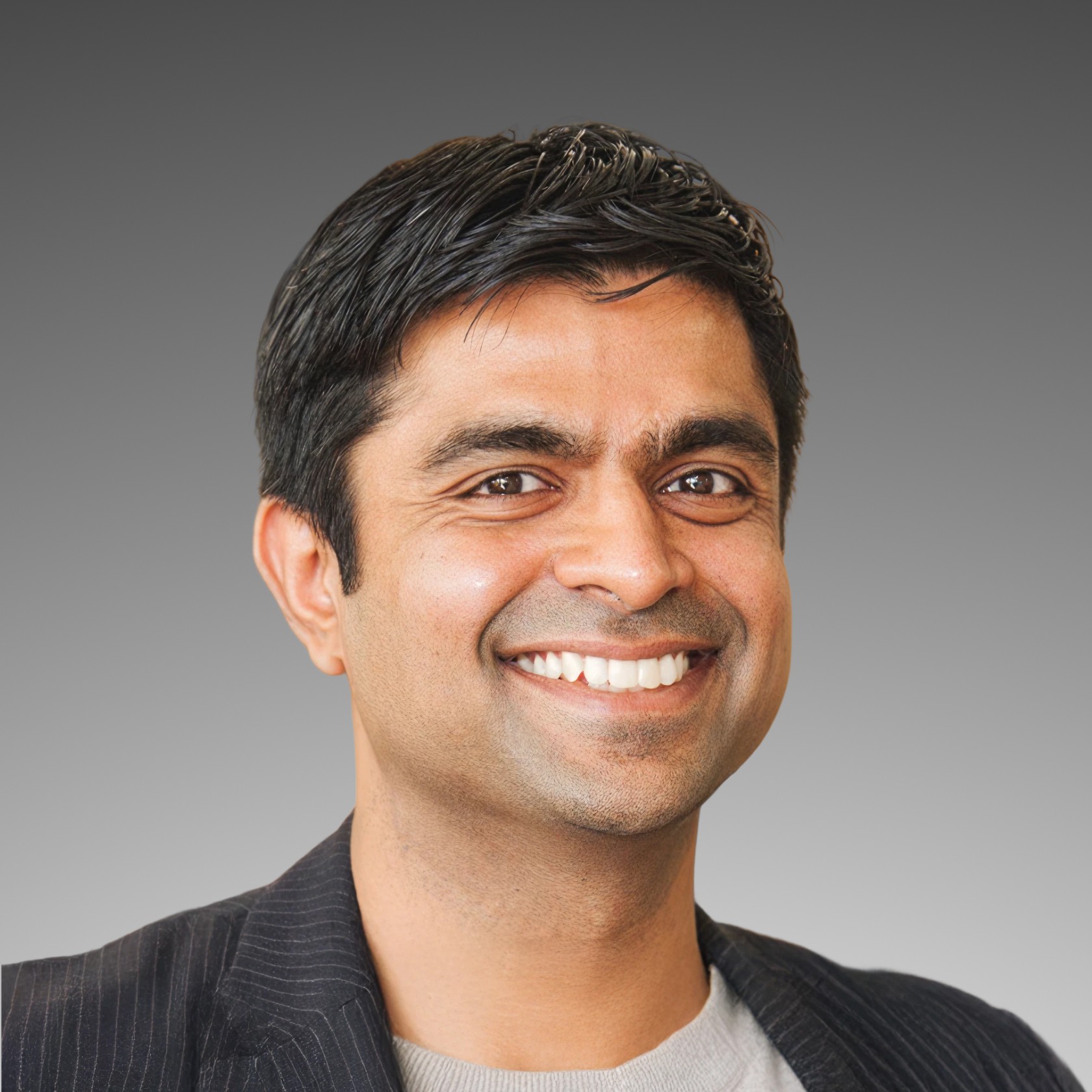
Hello, everyone, and welcome to another episode of the Security Podcast of Silicon Valley. I am your host, John McLaughlin, part of White Security, and we have an amazing guest for everyone today, Deepak Dutt, the founder and CEO of a visionary AI-powered cybersecurity startup called Zygra. Welcome to the show, Deepak. Thank you, John.
Happy to be here. Great to have you. I'm super excited to hear about Zygra. It's an AI-powered cybersecurity startup that specializes, as I understand it, in behavioral biometrics and adaptive security.
That's right. We kind of started off in the behavioral biometric space and worked from there into the overall adaptive security space because we kind of deal with a lot of sensors. And the early days was all about recognizing people on their devices and transactions, because in a highly digital world, how do you know who you're dealing with? And that's how we kind of started off in the behavioral biometric space.
Really good question. Now with all of the AI, deep fakes and everything, those are important questions. I remember there was a breach not too long ago with involved $200 million and a transfer and a fake Zoom call and a deep fake, and there it goes. We started off the journey a long time ago, but I think what's happened now is, you know, the same tools are available to everybody.
And the barriers to entry have been lowered so much that now you can have AI-powered attacks at scale. That's right. It's available to a very wide range of the both sides of the battlefield, I would let this say. Absolutely.
Absolutely. So you mentioned that you've been doing this for a hot minute. I'm super curious, what inspired your entrepreneurial journey? Starting early on, our biggest thing was, how do you detect who's the right person behind a device or transaction in a very transparent fashion, without having to go through hoops to prove who you are?
And we said, can we do that in a very invisible fashion, without bringing in all the friction involved with security? And we started taking a look at, how do you behave in a very normal fashion? Can we take that and create unique natures for you so that we can say, that's you, without you having to explicitly prove that every single second, if you may. So we looked at, you know, how you deal with your devices, mobile devices, laptop, desktop, or any sensor-based device.
And we took a look at how you hold the device, the angle you hold it, the pressure you apply in the touchscreen, and the acceleration which you move. Because all these sensors that are used for different purposes by applications, be it for gaming or be it for locating where you are. And we take a look at that and look at unique patterns that people have. We created an AI-powered lock screen.
It was a long time ago, right? And we put it onto the Google Play Store. And those days, Google let you actually bypass the lock screen if you had the right credentials, if you could prove who you are. We created an AI-powered lock screen, put it on the Google Play Store.
And within five weeks, we had around 25, 000 downloads across 70 different countries on 700 different device types. Oh, that's incredible. That's spectacular. So it's, if I may try to summarize, just from the sidelines and hearing about all of this now, it's almost like passive, adaptive, dynamic authentication that's continuous.
It's not like a point in time, you do an action, you have a proof, okay, this is probably John, or this is probably Deepak. And instead, it's just like, over time, a flowing percentage of like, yep, it still kind of seems like Deepak is holding the phone, or playing with the device, or whatever. Exactly, exactly. And tying it to a specific application, if you may, right?
So your mobile backing application, or payment application, or it's a military application, right? How do you know it's still the right user who's continuously using it without them having to go through all kinds of hoops? And you've been doing this since 2014. Okay, so did this start like in school as a research endeavor, and then it morphed into a company?
What's the story of Ziggurat there? Early days, we were in academia. We were collaborating with a couple of universities, once at the University of Waterloo, and Carlton here in Canada. And early days was all about research in that space.
The idea was to eventually come up with a thesis and a scientific paper. But what happened over time was we put together a lot of patents in this space. And we said, oh, that's incredible. We've got a lot of patents.
Maybe it's time to kind of take it and commercialize it. And what we noticed was we had 100 plus citations on our patents at that point. We said, that's interesting. We have all these large companies that are looking at our patents and making it part of their forward citations.
So we said, must be something very, very, very interesting. So if you could authenticate all those in a very passive manner, the implications of this technology are tremendous. That's where we started taking it and went through the Barclays, Texas accelerator back in 2016 and started working with some of the largest banks and financial institutions in solving the problem of fraud. I think that became our first use case.
And early days was all around fraud detection and continuous authentication. And more recently, over the last few years, it's been primarily in the defense space. So can we take it and apply it to the defense space, high security areas that we can use it for both digital and physical security, brought that technology into the defense space where it's very relevant today? I could imagine identity is such a hard spot.
And, you know, especially in military operations, you do want that. I could see like high security value in a continuous feedback loop, you know, instead of just one point in time. Absolutely. And I think this is kind of becoming now the core of any zero trust kind of initiatives within enterprises as well, because, you know, you need to continuously prove that because, as you mentioned, digital identity is kind of the core.
And how do you make sure that everybody who's using the application or the desktop or where they're getting access to that they are the real person and not somebody who's stolen your credentials? And that's what's kind of changed. So when back in 2016, when we looked at this site called haveibeenpawn. com, I think there was maybe a 10 million passwords or something like that that was breached.
And today, when you look at it, it's billions and billions of passwords. So that entire space has kind of changed. That really showcased the need for this kind of continuous kind of monitoring capability to say, OK, I'm still doing, you know, you've logged in, but I need to make sure that's actually you. So this kind of makes life easy, kind of makes it very passive behind the scenes without degrading the user experience.
And I think that's the efficiency that this kind of technology brings on to the fore. No, that's awesome. And I love that you went from a little bit more of the experimental, the zero to one, the research space, brought it to the financial industry, probably working with Royal Bank of Canada, big names like that. And then saturated the market.
Now you're on to defense. That's a spectacular like entrepreneurial story. And you've been doing this for so long. So props to you that that takes hard work and dedication and focus and grit and drive all of those things.
Absolutely. Our vision was to say, how do you make it available for any sensor based device? So we start around a mobile space, authentication, fraud detection, where are our core capabilities. But then if you look at what sensors are telling you, and what kind of stories we can build out of that, what kind of models we can build out of that.
And today, you just flush with sensors. So when you look at some of these kinds of spaces, we are saying, can you apply to cybersecurity? Obviously, is one of the spaces, but in defense context, now the electromagnetic spectrum is a huge space, because these are all invisible spaces where there could be drones, there could be jamming happening, there could be spoofing happening. But these are all driven by sensors.
It's a world driven by sensors. And then how can we apply the same kind of technology and philosophy that we learned in the cybersecurity world into the electronic space? How do we look at satellite data? How do we look at data coming from the sensors embedded inside drones?
Or is it, you know, data coming from, you know, the R spectrum, because you're able to kind of model the spectrum and say, this is how the behavior looks like. And this is, these are anomalies I'm seeing. Is, you know, somebody jamming me? Am I losing positioning because of that jamming?
Or somebody spoofing my location, and suddenly, it shows me like I'm somewhere else. And in the last few years, this has become very important as we are seeing a very geopolitically charged environment all over the world. My goodness, yes. Yeah, everywhere.
Dangerous. It's a politically charged environment. Right. And this kind of technology becomes very important because today's wars are initially started off with cybersecurity and electronic warfare, because you can do this from afar.
I think that's where a lot of innovation is going today, because defense becomes highly important. And when AI becomes powerful, you need to have tools to defend against that in a very fast fashion, if you may, or accelerated fashion. Exactly. Exactly.
So I'm, I'm super curious. Do you have any co-founders? Yes, I do. How did you meet them?
What's that story? Oh, met them in school. So we kind of started off early. They were doing their research.
We kind of partnered up together. And this person's a co-author on every single patent that I've put together except one. Yeah. Well, I kind of started off in the, in the, in the IP business early on.
So I kind of crafted my first patents and then he kind of joined in and we started crafting all these patents together. So do you guys find that like you're bringing different strengths to the table and there's a pretty healthy balance that's as co-founders together? Yeah. Absolutely.
My co-founder comes from a very academic kind of background, very much into the math side of things and around this philosophy around security of applying power of biological systems to security. So how biological systems do self-healing, how do you bring that kind of capability into the security space? So I think that's where the main contribution comes in, where he's highly technical, comes up with these algorithms and the kind of deep learnings within these kinds of algorithms. So that's, yeah, very complimentary skills.
So did you guys raise money? We've raised a couple of rounds of funding early on and over the last four, four, four years, I think we've been profitable. Wow. Congratulations.
That's almost unheard of. Like you're doing the old fashioned building a business thing where you operate in the green. Yeah. See, you need that early funding to kind of take you to a certain level that kind of propelled us into a direction where we eventually got into the defense space.
And now that becomes a space where they need these kinds of technologies early on, we were lucky enough to get to a stage where we could self-fund the company from that point onwards. That's spectacular to be profitable and still be able to tackle some of these extremely regulated, very difficult markets to get into. I think that's what you're probably going to see going forward because AI has kind of made companies extremely efficient. So you're able to do so much more with these kinds of technologies.
And we kind of adopted these kinds of technologies very early in our life cycle. Everything that we do is highly efficient. How AI kind of comes into it, it's kind of threaded into the different engines of our systems early on. So we get all those efficiencies that we built in early on.
But I think the rest of the industry is now catching up on those kinds of efficiencies. Yeah. I mean, a lot of times there'll be AI startups out there, they'll be building new AI things, and they not only have to deal with all of the traditional security questions around like, if you have a SaaS, like how are you securing the data in the cloud? That's very traditional security.
But then on top of that, you also have all of these new concerns around like, how is the model trained? Where's the data for that coming from? How do you secure the model against different types of LLM level injections or attacks? Exactly, exactly.
See, when we started off with the AI space, we kind of wanted to kind of build our entire AI stack from the ground up. Because the core tenant was, how do you make it explainable from day one? Because we didn't like the fact that it was a black box. And we didn't really understand what was going on inside.
So our thought was, can we make it explainable? And to the industries that we work in, this was very important. Because they don't want to make a decision that says it's a black box, they made a decision, how do you stand behind that decision? So if you get challenged, you need to be able to explain.
Tell this to your citizens of what you're actually doing, and how you're threading your AI capabilities. Does it have the right kind of ethics, the right kind of safety mechanisms and the right kind of security systems in place so that it doesn't have bias, it doesn't ensure discrimination? Yeah, I really appreciate that. So how do you deal with that?
There at Ziggra, there must be like biases or if you have mostly like in the military, I imagine that there's a lot of, it's a lot of guides, right? So does it work just as well for women? Absolutely. See, the key for us is to work with small amounts of data.
So when we, let's say you take the phone and then start interacting with it, we're building the model on the fly. It's not like we have trained it on, you see, because we are looking at doing knowledge detection. Exactly, exactly, exactly. So we don't have those biases that we have taken from previous and kind of build it into a base model.
We're learning from scratch very quickly. So, and we learn extremely fast, within two minutes. That's how fast we can learn. And then we adaptively learn beyond that.
But because that nature of things, we don't have bias already implemented into the models. No, that's incredible. I love, I love that approach. And so it's, it's a tailored approach for each individual.
Exactly, exactly. And whatever, whatever they bring to the table, whatever their experiences, however they hold the phone, whatever their ticks are, can be baseline, essentially. Part of our identity in some very concrete sense. So, yeah, I love that.
No, thank you for sharing. What's been the proudest day so far for you as an entrepreneur? I think as an entrepreneur, you kind of enjoy every part of the journey. Different times when you feel proud, you feel proud when you got your first customer, you got your patents, for example.
It took us five years plus to get our first patents. So that was, it took us a long time to just to get to our first patent. I think beyond that, it was when we got our first defense customer. I think that was an amazing day.
So I think it's been stitching together all these different dots along the way. I think each of these moments have been quite transformational, if you may. But it's about, end of the day, it's about bringing the right team of people around. So we have some capable people.
It's about a high quality people. So each time we bring some of these kind of very core people on board, I mean, those are extremely great days for us. It's very hard problems that we are trying to solve. And the technological risks are extremely high.
Yeah. I love the connection to people and just bringing on amazing people, passionate people, people with the expertise, can hit the ground running. I mean, what is a company except for just a group of people trying to make a difference? Yeah.
And it's a way of thinking, right? When you're looking at solving AI problems, there's different ways to go about it. There's only traditional deep learning and you're kind of entrenched in that world. But when you want to kind of take it and make it work in a very different way, because when people are running in a certain fashion around large models and lots and lots of data as a startup, how do you think differently and work with small amounts of data, make it explainable?
And then how do you have the right ethical thought processes? So when we build something, the first question we ask is, does it need to exist? Sure. If it does need to exist, great.
If not, then maybe not us. But that's the thought process. And that's part of the culture that you bring into the people that kind of work along the way. And that's what makes it all exciting.
Yeah. And I love that question. Does it need to exist? And I think for this in particular, like I have had a personal vendetta my entire career around, you know, insecurity.
I believe that we are not passwords. We can do better. I would love a piece of technology that matched all of the great advancements that we've had along the way. And so I think, does this need to exist?
This absolutely needs to exist because we are not passwords. Exactly. No, I think we constantly hear the days of passwords are over. I think people are on the journey.
We'll see. But every year we are hearing more and more passwords getting compromised. And now like MFA is required on everything and it's required everywhere. So we're starting to acknowledge that we have a problem, that we're moving towards better things than a brighter future.
And I totally could see a future where, you know, continuous passive behavioral biometric authentication is built into everything that we do. I think that would be great if we can be constantly protected and keeping it locally under our control so it's not centralized and it's not prone to the same kind of attacks. So I think it's about thinking through the technology and being very empathetic about your approach to building things. So then privacy is not something that you bolt on.
You kind of think about, okay, you know, how do you protect what you're building? And as you asked, right, where are you storing the models? How are you securing the models, right? These things become part of the design because, again, you want to keep this decentralized under the control of the user.
So again, it's not so much, you know, if you compromise the models because it's continuously changing, but it's about the trust that is being laid down in these kind of technologies. So I think having that kind of builds trust with the user so they are willing to use it and they're not kind of saying, oh, you're staying behind and looking at everything I'm doing because the sensor data is highly, highly sensitive because it tells you if you're sitting, standing, walking, where are you? What point of time? So you don't want that kind of behavioral data out there.
But that's where being very conscious of where you're securing it, storing it, and leveraging it becomes very important. Who knew in the future, like our accelerometer data is now maybe going to be considered as PII, like under GDPR. That changes things, doesn't it? No.
So, yeah, I mean, if you can tie it to the device, tie it to the user, then it becomes, okay, you know, that's. . . Identifiable now.
Yeah. That's exactly what authentication is, is the answer to the question, who are you? Exactly. Exactly.
And I mean, if you, you know, have that kind of tie in, I think that becomes an important factor, and which is why we've been always advocating for saying, you need to do this in a very thoughtful process of why do you have to take it up into the cloud? Why not process at the edge? Does it stay on the device? Is it a SLM type setup?
Yeah. So, yeah. So if you look at it, it has to be highly thermally efficient to be able to run entirely at the edge on the device. So how do you learn at the edge?
How do you infer at the edge without having any of that sensor data coming back onto the cloud? So that's a thought process. That's a philosophy that you got to implement day one, not take it in and then do all that and then say, now I got to push it back. But now I can't push it back because the models are too heavy.
Because you haven't thought through that design process of designing it on a thermally efficient or thermally constrained device at the edge. So a lot of people, what they do is then they learn, they try to push it back. And then, you know, when you try to do that kind of heavy compute on that mobile device probably catches fire. And this needs to work on a large number of devices.
It needs to work everywhere. It needs to work on airplanes too, where things turn on fire. On a $50 phone to a $1, 000 phone plus. And these sensors are all very different.
So how do you make it work? And that itself becomes a huge technical challenge. But you can't say I won't do it because, you know, I don't care about privacy. Privacy is absolutely important.
It is. And, you know, it's really foundational to everything, everything that we think about in terms of security. Like what is data security except just privacy? It's just controlling like who has access to the data.
So at some very fundamental level, that's what all security people, you know, every layer of security often goes back to just protect the piece of data. Exactly. See, you do it for that. But the end of the day, today helps us out because we're able to deploy at the edge, even in defense scenarios where you are in highly contested environments.
Because we had that as part of our philosophy, we can now say, yeah, put it at the edge, it's going to work. And you don't have to have this kind of continuous communications capabilities for it to work accurately. And that is now we are seeing it in a whole bunch of scenarios where that is the case. Yeah.
And it takes vision to be able to see that from the early days before you realize like, hey, how do we approach this? Should we beam everything back up to the cloud? And so props to you for the foresight and to everyone, really. Zikra, I'm sure you had many like internal intense discussions around that topic.
As I said, right, that's the discussion that we have before we even start building. What are the core capabilities that we need from a design standpoint? And that's kind of part of the culture is, yeah, that is the way we've been doing things for a specific reason. But now the reasons become very obvious because that is part of the requirements now.
Can you work in highly contested environments, GPS denied environments, cloud denied environments? Can you work in these kind of scenarios? And you say, yeah, absolutely. Oh, that's extremely challenging to get to.
So props to you and props to the team. And thank you to all of the gratitude in the world for thinking through these problems. I'm just always so grateful that super smart people are working on making the world a better place. Absolutely.
Absolutely. So may I ask, what's been the most challenging day that you've faced so far as an entrepreneur? Again, that's a loaded question because entrepreneurs have a lot of challenges that kind of come through as you can test to it. And when you take each and every system and say everything's challenging.
So from fundraising to the technical challenges that you're kind of dealing with on a design standpoint or engineering standpoint to making it work seamlessly for customers in highly contested environments. So the challenges kind of rolled through from multiple perspectives. And if you ask me, OK, what's the biggest challenge in the HR side of things? Hiring the right kind of talent is the highest challenge.
Whereas, you know, you go into something like, how do you get it to work on these kind of very, very lightweight devices? That's a technical challenge that we kind of deal with. So some of those kind of depending on the day kind of changes. And then it comes to, when you come to sales and marketing, what is the distribution challenge that we've been having?
I think that becomes a huge thing because this kind of technology, just even from a behavioral biometric standpoint, it can come into the device level, could go into the chip level, could go into the operating system level, can go into the application level. Then distribution becomes an extremely challenging kind of prospect and say, OK, with all these different options, which one's probably the best for us to kind of take and run? The applications are probably the fastest. You can build an SDK, get it embedded in and kind of drive that.
So the most challenging part would be to kind of take this and say, where do you apply this to have the biggest impact for humanity? And I think that's the way I look at those challenges and say, can you make it deliver for those kind of environments? That would be our biggest challenge is to get this into the hands of as many people as possible. I think that's still a challenge I'm trying to figure out and solve.
The journey, right? I always like to think of, you know, it's always very fun to play with new technologies and it's great to build things. But if the things that we end up building are not easy for other people to adopt, I think easy is the right word, easy for other people to adopt. And that means like for B2C play, that means individuals.
For B2B play, that means businesses. And for B2G, that means like government counterparts. If it's not easy for the folks that we have in mind to adopt, it's not innovation. And it's not going to change the world.
You're not going to get any traction. It's not going to be adopted. And it's going to be fun. You can have fun with it and play with it.
You can learn a lot. I think at the end of the day, it's the impact. You want to get to your customers, get to your team, right? So I think every day for us is that impact kind of question.
And again, that kind of drives the entire team. The fun challenge that we have is, are there tasks there that you're working on that doesn't have any impact? If it doesn't, maybe it shouldn't be there. So having everybody think through that impact on a daily basis becomes a fun part where people can self-prioritize and then jump forward.
You trust people. I love that. I love that. Surround yourself with incredibly gifted and talented folks and just invite them to marinate on super challenging problems and trust that they're going to think through those things.
Absolutely. All right. Let's go into the future together. And I'll let you decide how far into that future we should travel together.
But imagine a future and you see this future. What do you think will be the most challenging security problem that the security community will face in the future? I think security folks are always facing that kind of challenge on a daily basis, right? I mean, there's all kinds of problems coming at them.
And the most recently, it's about AI and generative AI and all those kind of AI generated attacks that are coming that, as I see, right, is just reducing the barrier to entry and happens both in the digital world and the physical world or in the, you know, electromagnetic space. Tools are available today for $50 you could buy and you could start jamming the satellite signals. I mean, so these kind of challenges exist and there's these kind of disruptions that are caused intentionally. But what I'm concerned the most in probably going into the future is what are the unintended interferences that can happen?
And part of that is happening today from a social engineering perspective. People are social engineering their way into your lives to kind of create that kind of disruptions. So how do you protect each and everybody from these kind of attacks? And attacks could be scam-based attacks.
I mean, on the higher end, you could think about all these automated machines going and creating a scale, doing attacks at scale. But end of the day, I mean, how do you protect every single person in an invisible fashion, right? I think otherwise, humans become that core weak point where the attacks can permeate from. So I think in the future, I think we need to have these agents that are protecting every single person and avoiding them to become the starting points of new kind of cyber attacks.
So I think that's the way I'm going to characterize it just because if you have seven or 10 billion people, 8 billion people plus, right? So if each become a vector of attack, that's problematic. And all the devices around them, how do security folks craft those kinds of tools that can protect every single person? I think rather than, you know, currently we think about protecting the backend for data and the servers and stuff.
But I think the challenge would be to protect the endpoints, not the human endpoints. Human endpoints. Yeah. The people.
What matter at the end of the day? Do you see the degree engaging that challenge directly as you guys grow and as you guys continue? I think that's always been something that's driving us is how do you get to that? But when you kind of think about it today, you are kind of looking at how do you scale this company to get to that eventual space where you can help small communities and customers and the defense folks.
And, but eventually I think it needs to go into a space where you're protecting a consumer. So I have a lot of people that come tell me about the passwords problem. They're having the scam problems they're having. End of the day, how do you build something that's kind of omnipresent like that?
Do you do it in such a fashion that it's in everything that they do by embedding this into all the applications and tools and devices they're using? Or do you have another way of doing it directly into the consumer side? That would be the level of impact that we would like to hit. Right now, we're looking at applications.
You embed this within applications and as many applications, but the applications are just going through the roof because every application is now becoming a fintech application. If you think about it now, how do you protect all those applications? And being able to kind of scale to get to those applications would be one way of kind of doing it. But again, not being able to get to that impact level of, you know, 7 billion plus people or a billion people.
So I think that's something that's always on top of mind and how do you get there would be quite interesting. That's the question. That's the journey. I love that you're thinking through it though.
If you could travel back in time and meet your younger self, would you? And what advice would you have for your younger self? I think connecting the dots back, I think it's easier to kind of say, you know, how you kind of think through it. And because again, if you just look at AI, it's gone through so many iterations and waves.
You have the AI that goes into the winters and comes into the summer, keeps going, right? One simple way of doing it is, okay, you go back and say, okay, you need to build these kinds of agentic systems early on. Or you go back and say, from a security cap on, you say, shouldn't have used passwords that you want. So that's why I said you could take each inflection point of technology and say, this is the way you should do it.
Well, when they put together the GPS satellites, we should have put more security into them so that these signals could be secured. When you go back from a technology perspective, those are the kinds of things that you can kind of tell and say, oh, you could have solved these problems a long time ago, but we kind of let them permeate through and now we're solving the symptoms. Yeah. Yeah.
We're solving pain points. These are the symptoms of all the decisions that were laid before us. But I mean, like, yeah, yeah, I appreciate that. I get that.
I mean, technologically speaking. Of course, of course. I mean, in some sense, like, you know, when the internet was just being bubbled around and someone was like, oh, I have a service now on the internet and like, oh, I would love to do something just as you. And it's like, well, how do I identify that that's you?
And it's like, well, do you know any secrets? Like, just tell the secret to the computer. And like, that's if you are the only person in the whole world that knows that, that secret, then that must be you. So welcome to the system.
You know, that's and at the time, maybe that was the right thing to do to keep things moving and keep things moving fast. And now we have a different problem on our hands because everyone's on the internet. And it's not just the compute has become incredibly cheap and memory is incredibly cheap and software writing itself. Now it's incredible.
Yeah, no, I think it's a fair point, right? Because if you think about it, I mean, mobile devices didn't have sensors in them. If mobile devices weren't there, then there was no point of having sensors. And if there was no point of having sensors, then there was no concept of security or continuous security required.
So I think we've had inflection points throughout. And yeah, I think today we have a very different kind of inflection point. And we'll see where this kind of journey takes us. I think we have to take that into context when we go back in the journey.
Yeah. And I'm excited that there's really incredibly smart, gifted, talented, focused people thinking through all of these new problems that we have. No, absolutely. I think every generation or every new inflection point has a lot of brilliant people that come and solve the problems that are required to get solved at that point in time.
I mean, we have a whole set of different problems today. And we're going to have different types of innovators coming and solving those. So let me ask you a little bit of a leading question. We have a lot of founders, entrepreneurs that listen to this show, and you'll see why this is a leading question.
But do you wish that someone would just step forward and solve one particular pain point that just nags at you and you've seen over and over again, and you'd be very happy to pay money to someone else to have this problem solved? They could just go off and solve it. What would that be? It's the traffic problem.
The problem of traffic, having to deal with traffic. It's a problem that is omnipresent everywhere in the world. It's a problem that's going to keep growing. Every city has to kind of deal with it, be it Toronto or be it Ottawa or be it the Bay Area, right?
I think this is a problem that if solved, can scale. Because again, you're impacting a lot of people. It's coming back to impact. I mean, there's lots and lots of problems.
But the problem with traffic, I'm saying is because if we can solve that, we alleviate a lot of issues. So the journey is all about the user experience and making things frictionless. Traffic is one of those friction points. Somebody can apply and start solving those problems.
That'll be amazing. The impact of that is amazing. Huge. It would be incredible.
That would be so nice. That would be perfect. Well, Deepak, thank you so much for joining on this episode of the Security Podcast of Silicon Valley. I'm one of the hosts, John McLaughlin.
It's been an absolute honor and pleasure to hear about your entrepreneurial journey there at Digra as founder and CEO towards the direction of actually a profitable company. Congratulations on that. That's huge. Thank you, John.
I appreciate your time and enjoyed the conversation today. We will have to do it again. And also, thank you to all of our listeners for tuning in to another episode of the Security Podcast of Silicon Valley. This has been a Y Security production, and please stay tuned for the next one, too.

This episode covered SOC 2.
YSecurity helps teams get audit-ready without slowing the roadmap, from first scoping call to clean opinion.
Talk to YSecurity