46. Polina Morozov, Security Recruiter at Grammarly on Navigating Careers and Culture in Cybersecurity
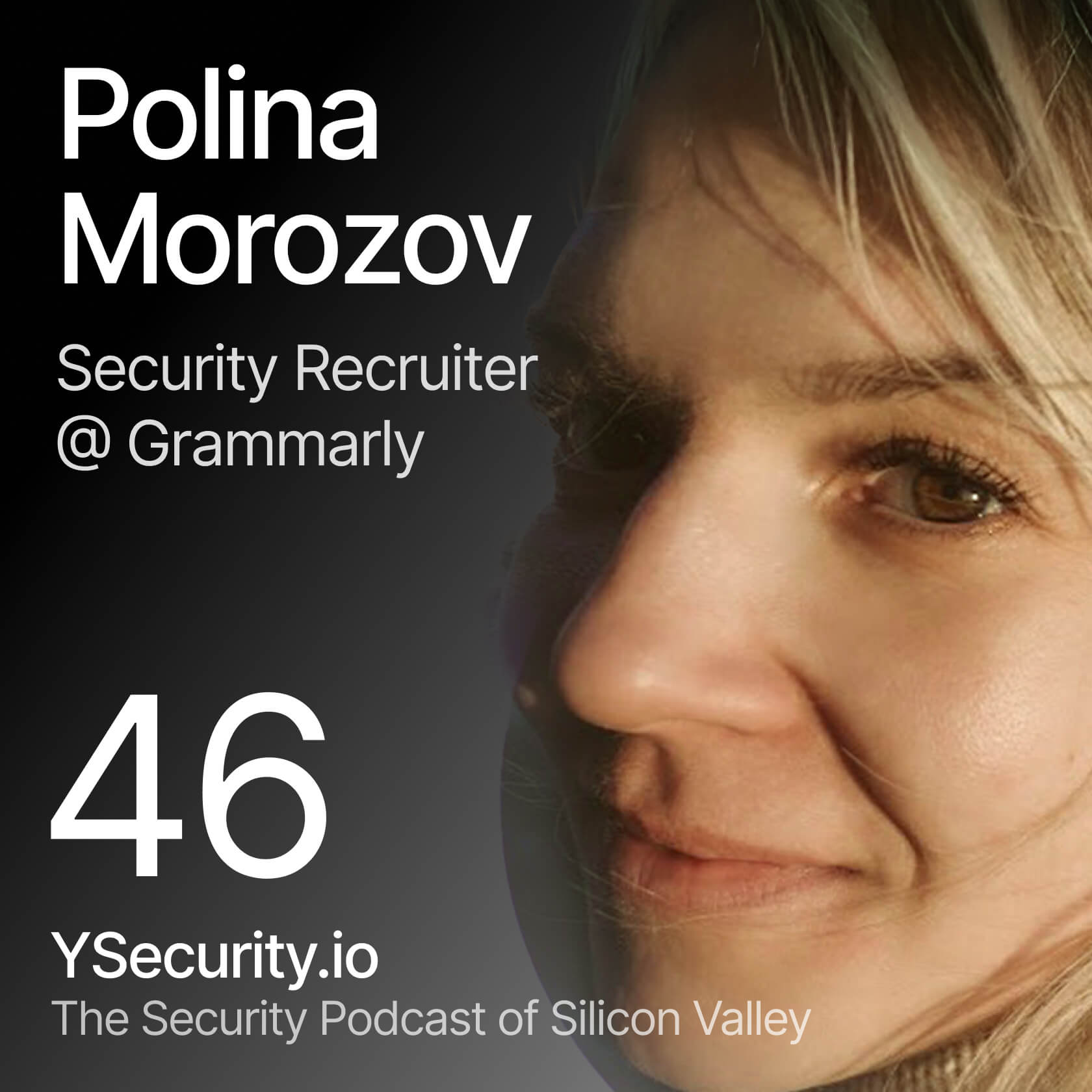
Hello, everyone, and welcome to another episode of the Security Podcast of Silicon Valley, a Y Security production. I'm your host, John McLaughlin, and I am joined today by a very special guest, Polina Morazov. Thank you, John. I'm really excited to be here and talk about all things recruiting.
Awesome. You're a recruiter at Grammarly. I am, yes. I'm a huge fan of Grammarly.
They help my communication, my written communication on pretty much everything. Yeah, that's music to my ears. I remember when I first started using Grammarly, I was at Pure Storage, and I actually had bell workers come up to me and say, did you take a communication class? What's going on?
Your communication is so much better. Your written communications. I was like, no, it's just Grammarly. Just Grammarly.
Yeah. So similarly to you, I also have been using Grammarly forever in college. And then when I started in recruiting, because it entails a lot of writing, and that's why, like one of the reasons why I joined Grammarly as well. I bet as a recruiter, you are communicating all the time.
Yes, nonstop. That's basically the job. That's the job. Yeah.
So how did you get into recruiting? Yeah. So most of my colleagues will probably agree that no one grows up wanting to be a recruiter. I didn't even know that this job exists.
And I think my parents still don't know what I do, but I fell into it. So I graduated from UCLA and I studied international development studies. And so there in a young romantic manner, I wanted to be a diplomat or go to law school. And it just wasn't in the cards for me.
I am an immigrant. And so I moved to America in like middle school when I was a teenager and I needed to work essentially. So like that was the thing. I couldn't continue my education.
And so right after college, I was doing something else. I was working for like a property management company, which was very interesting experience. Like I loved my boss. She was like very inspiring.
But there was just not many career growth opportunities. And I think I was like making minimum wage at the time. So I was like really trying to find something right anywhere. It was also like an interesting time with it, like our economy and like the jobs were scarce at the time as well.
So I did get hooked up with a job. One of my husband's cousins was working at a startup in L. A. And he was a lawyer and he was running all the HR operations.
This was also probably 12 years ago. He was starting out his career like just like myself. And he needed help. And he just needed someone who's going to help him in all of the HR motions.
And the startup was like at 35 people at the time. So like I interviewed with him. I did go through the process and he, you know, did hire me. And I did everything in HR from payroll to planning our events to like moving offices once we grew.
Stocking kitchen and then also recruiting. And I am very shy by nature as well. And always try to push the boundary of my comfort zone. And that's like part of the reason why I'm doing this today as well.
It's me. Yeah. And so I also found that I really connected with engineers. Engineers at the company or like engineers that I would talk to when I was recruiting for the startup.
I think we're like because they're also like introverted like myself. They maybe didn't feel like very intimidated by me because I wasn't like very salesy in like my demeanor. And I just like really liked it. I like learning about computer science and like what these people are able to create.
And I like that it was like really challenging me. So gravitated towards recruiting. So eventually I did leave the startup. I had my first child and it was like an hour and a half commute from our house.
So I needed to find something more like conducive. So I did. Yeah. So I did get a job at an agency, Hire Cloud, where it was like your regular like contingency agency.
And I spent about a year and a half there just working as a recruiter, account manager, learning the ropes, trying to get like business from for us, going to Santa Monica and Venice and like cold calling and learning the job from that perspective. But I always knew about Bink, which was there no longer exists, but which was like an RPO recruiting firm out in the Valley that was consulting all the hot companies in the Bay Area essentially. And I really wanted to work there because I knew that it would give me exposure to these organizations where I wouldn't be able to actually move to the Bay Area. And then they had really great recruiters and I wanted to be mentored by them.
And I got hired and the rest is like history. It was a great experience. I consulted many companies from, you know, Airbnb to Ripple, Capital One, Instacart. Then I also worked with some blockchain companies like Protocol Labs.
And we ended. Yeah. And then we ended up getting acquired by Robinhood and they absorbed the whole team. And then, yes, I was at Robinhood for about a year and a half.
And then I left because Grammarly actually reached out to me and I couldn't say no to them. That's spectacular. That's an incredible story. You have a common theme of always pushing yourself outside your comfort zone and position yourself to learn and to grow and surround yourself with smart people.
Thank you. Thank you for your kind words. I mean, being an introvert is amazing, though, too. That just means like we recharge better sometimes with less folks around us.
That's not a bad thing. No. I love my alone time. That's awesome.
I do, too, to be totally honest. So now at Grammarly, what do you do? So now I do also support our security team. We call it Trust.
So I work closely with our CISO, Suha, and then a bunch of different hiring managers supporting hiring for their specific orgs. I did support like different teams at Grammarly from our like Grammarly for developers when that was a thing to machine learning. But really, I do have a special place for security teams. And I really do enjoy the roles and like the unique, like smaller community of like security world.
And so I just gravitated right back into that. So now I feel very well. Yeah. On security and trust.
Yes. Security and trust. I love how Grammarly calls that team trust. Just security.
Yeah. Trust is big for us. Like we really want our users to be able to trust our product. And we do work on that really hard.
I know. I imagine that you do because the product, in order for it to be useful, it has to read things that you're typing in. It has to read emails. It has that there's a very convenient, very fun keyboard on the iPhone.
It is reading things. So trust is very important if you're going to be using this service. Super happy to hear that Grammarly takes all of that very seriously. We do.
Yes. So what's maybe what's the most challenging role that you've ever felt? Yeah. I've been actually like answering this question in like my mind for a few weeks now and like pondering on what a good answer would be.
Because there's really not a role that's like really challenging, in my opinion. Like you can always find someone, right? You can change your requirements, adjust, pivot, depending on what the market, what is market telling you and what kind of talent you're attracting. So that's actually the easy part.
The roles themselves. The roles themselves. What's challenging in recruiting is when you have some like roadblocks and blockers in your process or in your hiring partners. Because I think every recruiter will tell you that they'll, they experience this where if your hiring manager, maybe it's like a new hiring manager and needs a lot of like training on how to like interview and the nuances of the process.
Or if there's blockers in the process itself, like not having good rubrics or maybe having the bar too high, that's not aligned to like the level. You just say no to everybody maybe sometimes. Sometimes you just, yeah, right. You start saying no to everyone.
So it's more about like your partners, right? In the process and the process itself that's challenging. Like when I was a consultant, also like supporting startups, like maybe their comp is not as competitive, right? And so that's becomes a big challenge to attract the talent that they want.
So it's less about the role itself because if you have receptive team, then you can adjust and find the right person. It's more about having that right team and the right processes in place. That's nice. I know.
I appreciate the insight. Yeah. Go ahead. Oh, go ahead.
No, I was saying that there is like, there is a process and a method to this madness, right? So there's certain things that need to be done that yield in like positive result and end up in a higher. And so like when you miss some of the steps and things get like when you deviate from like the process, that's when you get yourself in trouble. Yeah.
I could only imagine. And I imagine that intersection between security and recruiting has some nuances about it that just don't exist in other parts of the org or in other parts of recruiting, maybe in general. What can you share with us about that? Yeah.
I mean, I think it's also like security is a really small world. And I did find that everyone knows everyone. So like networking is really important, for example, networking and making sure that like you're leaving positive, lasting impressions on your current roles. Because I do find that it's a very like close knit community.
I guess if everyone knows everyone else and like a reality TV show. And sometimes it does seem that way. So I think like networking in security is really important. And that's how you can also you get your next job or get your next opportunity.
Right. I do find that a lot of people follow each other as well. Where in like the general like software engineering world, I see less of that because it's like there's more people, more opportunities, etc. Where in security, it's very niche.
I've always thought about security being like you mentioned before, focus on trust. And when you bump into people that you enjoy working with and that you work well together with, that there's a sense of trust that developed. In security, especially, it's so important. So maybe that's why folks maybe will sometimes follow each other a little bit.
Yeah, that's a good point. It's just like that theme of trust all across. I know Grammarly has a pretty strong consumer presence. And so us as individuals, we can sign up and we can use it.
I don't know if it has too much of a business presence, like if there's business sales. But have you ever had to hire for a compliance room that maybe doubled up because of business needs? Yeah. And so I'll answer your first question.
So, yes, we do have over 30 million individual users using Grammarly, 30 million per week. And then we actually also have over 70, 000 teams connecting on Grammarly. And it's actually like one of our bigger focuses right now is on our enterprise offering, where we would like for more organizations to be able to use Grammarly in their ecosystem. It's a very tailored experience because there is a big generative AI component.
We're also like able to pull information from like your internal like wiki pages or your docs and help you with company tone. And so we've really honed in on helping you with productivity and decreasing the number of like hours you spend on communication. And then also like digesting the information that's being sent to you. So I'm not sure if you saw there's a couple of like really cute commercials out there that like take place in an office space environment.
And it's like really cute and funny. And if you haven't, check it out on YouTube. We'll put the links in the show description. Okay, cool.
Perfect. Yeah. And so our focus is actually in helping more organizations be more productive and like effective in their communication across their teams. And that's like what we're focusing on right now and continuing to grow like that client base.
In terms of compliance roles, I personally haven't worked on any compliance roles. So I'm mostly focused on similarly to like when I was at Robin Hood, more on like product security roles, corporate security roles, some system engineering type roles. I do have an AI security researcher role that I'm working on. It's just like recently kicked off where like we're looking for someone who can really spearhead that for us.
The security specifically in like in AI products and spearhead like research in that area and represent grammarly for us. So that's one of like really niche, interesting roles. That's so specific. Yeah, it's very specific for sure.
It's one of those roles. But yeah, not compliance or not yet at least. Yeah, not yet. In cybersecurity in general, do you feel like that there's any sort of shortage of talent out there?
Is it sometimes challenging to find the right thing or pro at it? So I'm sure it's like always like just super easy. So easy. I've heard people talk about this thing called like the cybersecurity talent shortage.
Yeah. So generally speaking, I feel like people are also more hesitant to maybe move right now just because of the economy. And if they do have a good gig and they're like they're really good at what they do, they're not ready to jump on a new opportunity very readily. So it does take more time to warm them up to the idea of maybe leaving and exploring something else.
I mean, yeah. And then I think there's probably is a shortage of talent, especially when you're looking at like top tier talent. Grammarly is in a unique position where we are making some like really big bets and we need some talents to come in that can really jump on things and solve them for us now. And might not have a lot of time to run people up and did find that it's the volume of candidates.
And it takes a longer time to engage with folks and again to like convince them to look outside of their current opportunity. I guess. I mean, there's a lot of layoffs happening in the Bay Area and just with the economy in general. Do you find that similar things are happening with cybersecurity roles?
And they're probably not like their top talent. Right. I mean, sometimes they do for sure, especially like larger organizations. Like they just make decisions, I think.
And then they just do it. Or like they decide to cut a business line. Right. And that has nothing to do with performance.
Yeah. And there's been so many way offs. So for security, because I also like I've been like helping out and dabbling in just like general engineering roles as well. And there's like definitely more layoffs in the engineering world when you look at it versus security.
I think security teams been affected like less so than all other teams, because obviously it's like an important function for many organizations. So I don't I actually don't come across many security engineers who have been laid off. There's maybe like a few, but not many. And I can't even think of anyone that I'm talking to right now who's been laid off.
Like most people are currently employed. So I do feel like the security world's been affected less. So, yeah. How about you?
Have you noticed that it's been affected more? Oh, I mean, I do. What's been your experience? When there is a round of layoffs and they do sometimes impact security, I will be pinged from people asking about opportunities that I might know all of.
Yeah. Advice sometimes because it's like emotionally can be challenging. It's also. Yeah.
I mean, maybe it's also because of like my perspective, like a lot of recruiters have been laid off on the last. Yeah. Probably like a year and a half. So it's been really rough out there.
And similarly to you, I get a lot of messages from like my friends and colleagues looking for work. And there's not that many companies are looking for recruiters. And unfortunately, we're always the first ones to be let go. Because when companies stop hiring, like the recruiters are the ones who don't have work.
It's about people reaching out to us. And in times when they're looking for new opportunities, would you suggest that there's a, there's like a best way to use your network? Like a really good way to use your network? Do your research.
Really read. Learn about the company. Use the product. Learn about the product.
Look at the jobs. Make sure you're really aligned to the job that you're asking to be referred to. And then also write a quick pitch about yourself. Like why you are the right person or like, why should you be considered in the running for this role?
And don't make it too long. Because I do also get many pings from like different kinds of like backgrounds about roles that grammarly and oftentimes like they haven't done their research. Or like they just read the title of the role and they didn't read the job description. And then like their background is actually not like a fit.
So the more homework you do, the easier it will be for the person A to refer you. And then they just show more enthusiasm about wanting to work there. And it's like really important to, you want to flatter them up. Like you want to tell them, yes, like this is the company where I want to be.
Because people are very receptive to that. So I think that's really important. Amazing. Do you have a favorite role to hire for?
Like you see something open up for an ex come in and you get excited. Yeah. I mean, I do enjoy like more senior roles, to be honest. Like anything like manager and above directors, VPs, lead, like tech staff people.
Like everyone who's like more senior, I just like love to learn about like their story. And then the search allows me to slow down, right? Because I can like just look for, I don't need such high volume of candidates in the pipeline. It's more about finding that right match to the role.
It's, it becomes more of a matchmaking game versus just volume. Volume. Yeah. And I do enjoy that because I do try to connect with my candidates and learn about them, learn what's important to them and really make sure that they also have all the information they need to make a decision about the role.
And I love like building that, like trust again with my candidates. So. Sounds like a great networking opportunity for the recruiter as well. Yeah, for sure.
Yeah. Stay in touch with folks that you interview and maybe it's not a good fit, but you just happen to stay in touch with them through future opportunities maybe or. Yeah. I've stayed in touch with a lot of people from Robinhood, for example, right?
And folks that I've hired and we do check in time to time. And it's also like part of building your network. And then I deal roles that are like really hard to find the AI security researcher role I'm working on. That's really interesting.
Like learning a ton. And then also I like to look for that needle in the haystack and try different strategies when it comes to sourcing outside of just looking on LinkedIn, right? And shining to like reading through research papers right now, for example. So research papers, you're reached out to them, maybe.
Yeah. And lately that's what I've been doing, which is fun. And I don't know. I like more niche, like difficult roles.
You like a good challenge. I do like a good challenge. Yes. That's spectacular.
I think a lot of people in security get into security because they're just really complex, intricate puzzles. And the answer to the question, what is the right thing to do here? It's just obvious. Yeah.
Yeah. I can see that. So with Grammarly being a Ukrainian founded company and everything that's going on over there right now, I'm sure that has touched the company culture a little bit. And you mentioned yourself that you're an immigrant.
I have all of the respect and love in the world for the Ukrainian people and heart goes out to them for everything that's happening. And there's nothing glorious about war, but have you noticed has had an impact on the culture? Yeah. Yeah.
I mean, we're very deeply connected to Ukraine because our company was founded in Ukraine. Our co-founders are from Ukraine and we have many team members who call Ukraine home. So the war started in February of 2022 and then I started with Grammarly in June of 2022. So I wasn't there for that transition.
I don't know what the culture was before. I haven't experienced it. But part of the reason why I joined was because it was a Ukrainian company. And like when I saw what was happening in Ukraine and the war, it like deeply affected me on the personal level.
I'm actually from Russia. But one of the reasons why we left Russia was because of its government. And we left in 2000 when Putin did become a president. And my husband's family is from Ukraine.
Oh, OK. So Romeo and Juliet. I mean, sorry. I mean, I'm 100 percent like Ukraine.
Pro-yane. So it's not even like a question. But yeah. So it was part of the reason why I wanted also to join Grammarly because it meant a lot to me that I could contribute in any way, shape or form in like supporting the Ukrainian people.
And Grammarly has done a lot for Ukraine and their employees. For employees, obviously, like they've supported them in many ways through the war. And some people were helped to move out of Ukraine. And one of we also opened an office in Germany.
And so a lot of folks moved to Germany during the war. We also donated over five million dollars to various organizations supporting Ukrainian people. And we offer Grammarly and all of our paid features in Ukraine for free to anyone who wants to use it. So that's also a way to contribute.
And then. Yeah. And I'm sure like we've done a lot more that I'm forgetting about or not even aware about because we're so embedded in and invested into Ukraine that like there's just a lot of maybe even intangible things that we've done during this like really difficult time. With you being from Russia and your husband being from Ukraine and with extended family.
But has that been challenging? I mean, not really. I come from a very small family. Everyone is in America now.
So no one is in Russia. I have some very distant family members, but I'm not in touch with them. And so I've always it's funny because like I've always after like I immigrated to United States, like most of my friends always been Ukrainian. And so one of my best friends was Ukrainian.
And I almost lived at her house for a period of time in like high school and college. And so like I feel very connected to that culture. So there's not any kind of a divide or any question in mind when my family about who to support or what's happening. No, I mean, it's spectacular to hear.
Some of the closest people in my life and chosen family from Russia, Belarus and Ukraine. So just like all three just hanging out. Yeah. And I mean, if people have moved out of the country into the United States, I think that's obviously explains.
It changes things. Yeah. It changes things. And they wouldn't have left if they liked it there or supported the government.
So obviously they're not in alignment with what's happening. The propaganda machine can't touch you like way over here. Yeah. No.
Well, that's amazing. It's amazing. It warms my heart that Grammarly is playing an active role to make the lives of those folks going through a challenging moment. Yeah.
We just had an offsite in San Francisco for the people team at Grammarly. And we had a lot of our team members from Ukraine and those who had to be misplaced because of the war come and join. It was like an amazing experience to hang out with them and just see how incredible and strong they are. Because like they're still very positive and living their lives when there's all these like different things going on there.
And they also have family in Ukraine. And it was just like incredible to witness their like strength and like life philosophy. So it's like a very interesting experience. Yeah, absolutely.
I mean, I think it's those challenging moments and those moments where we're outside of our comfort zone. That not only are we like learning and we're growing, but you really get to see like people's true colors come out. And for most of humanity, that's really beautiful. For sure.
So what's the best day that you've had at Grammarly? Yeah, so it was recent, honestly. Yeah, we when we had that offsite, like the whole experience is pretty great. We hired some like new talent on the team, head of our like talent acquisition.
I got also a new manager and they're just like amazing, incredible people. And it was very energizing to meet them because when like your leadership changes, you don't know what to expect. It could be scary at times, but it was great meeting with them. And I felt like my personal like beliefs when it comes to this like art of recruiting very much aligned with like their philosophies and beliefs, which really energized me and made me even more excited about being part of this like journey, like hiring people and like growing Grammarly.
And so that was really great. And then we just had some like fun little events that they put together. So it's always good to get pampered and like they whined and dined us. And she's like, that's nice.
Good time. Yeah. So that was definitely like a really good day. And then I always have a great day when candidate accepts my offer and like they they're excited about joining.
That's always worthy, celebrating and makes me really happy. What's the most challenging day that you've faced at Grammarly? Yeah, that's a difficult question. And I do have a few like our job is very much dependent on other people and like other people's decisions and other people like moves.
And a lot of it is out of our control. So obviously, when someone decides not to join Grammarly for legitimate reasons, because they have to do what's best for them. Right. And sometimes it's not us, which is like totally fine.
But definitely like it's a little bit like sad because I did want to make it work, but it didn't. So and then also I'll be more vague. But when you're hiring partners, don't like partner up with you the way that you want them to or don't see the value in your job. I think recruiter recruiting and recruiters do have a vet rep because there are a lot of vet recruiters out there and people do have vet experiences with recruiting, which kind of prevents us from trusting us.
And so when you work with either a candidate or hiring manager who is apprehensive, had better experiences in the past. And you really need to like work extra hard on earning that trust and like showing your value and showing them that, hey, I'm really here to support you and help you. And you can trust me and I know what I'm doing through this process. And that becomes challenging because it does take time.
Right. So it's not going to be immediate and it can take any amount of time, depending on who you're working with. And that's like challenging sometimes to build those relationships. Yeah, that can be.
And I appreciate your sharing. I know that's a difficult question, but on a lighter note, do you have a favorite interview question or is there something is there a green flag that you look for when you're interviewing somebody? Yeah, I don't have one question. I love when people like don't try to be super and you just get on the phone with them.
You're like, hey, how are you? And they start telling you a little bit about themselves. They ask you about you and it's casual and that they're like being themselves and being vulnerable. I think that's like very important.
I try to ask more like vague questions to just get to know them. Like I always interested to know, hey, like, why are you looking right? What made you talk to me today? Why are you leaving?
What's missing for you? Right. Would be like the ideal next opportunity for you. Because I do want to learn more about the candidates and then figure out maybe not this role, but maybe there's a different role that would be better fit for you.
Right. But just when candidates are being like vulnerable and honest with me, like that makes my job really easy. And same goes to all of it. Like when we're talking about like more compensation questions or questions about some other things that's really important to them.
I try to be very transparent, as transparent as I can be about grammar, the role, anything in between. Right. I overshare usually. So that typically makes them overshare as well, which I appreciate.
But it is difficult when they don't and they try to hold their like closed off because then I don't know where what they're thinking. Like, do they really want to work here? What's happening makes me question it. But there's that one question.
And I love to just get to know them through the process, too, because like I often tell people that they'll become like my best friend for the next three weeks or like four weeks, however long the process takes. And I love just learning about like their families or their hobbies or like where they traveled. And it's a longer process. But it's interesting to learn about like people's like just like history and like what they're about and how like different.
But yet the same everyone is. I mean, these are human beings. Yeah. Yeah.
What about red flags? Things that are just like, whoa, what was that? Yeah, I do get red flags sometimes, too. I mean, one, if you're talking to any company, right, do your research, make sure that you know what the company does.
Sometimes I'll get on a call and they have never heard of Grammarly, have no idea what we do. That's a red flag because like, why are we talking? Obviously, I'll tell you more about us, but do a little bit of research, at least, especially like when I'm talking to more senior people, right, who've been around the block for a while. And then when they start, there's obviously some nuance to interviewing.
And people will sometimes start venting to me about like their co-workers or like blaming the circumstances or their managers on like why things didn't work out. Like not taking responsibility for anything that has happened or like it's happening to them. Not talking about ways like they tried to resolve or like troubleshoot. And it's more just like maybe like somewhat not self-aware at times.
Sure. I mean, you're not you're not there to take a therapy call, right? Right. It's not a therapy call.
Also, it's like when you're being very aggressive and just not I don't know, like not taking any responsibility and just like saying, well, I'm leaving because the team is terrible. Everything's horrible. Maybe the signal that you're getting from that. Right.
Run away from problems. You run away from problems. Yes. Yeah.
And then also you can be honest, especially with me, because I do understand very empathetic. Right. But there's also a way to like present that information. It's still an interview.
So there is an etiquette. And some of this information, maybe share with your friends over drinks and not with me. Yes. Yes.
No, that's that's too bad that happens. Yeah, it happens. Sometimes I wish like I could coach people on how to interview because, again, like there is an art to this. And I think sometimes people just don't know how to interview.
Maybe they've been in like the same job for a really long time and like they haven't interviewed. And so they're a little bit rusty. And I do try to give some feedback when we're talking. And I'll say, hey, if you this question comes up when you're talking to us later in the process, maybe try to say this instead of that.
But I wish I could coach them a little bit more as well, because I think it's hard. And some people are really great at it and some are not. And it takes time to really learn how to interview. I'm sure it's a skill.
Yeah. Anything you can improve skills that we have. And it takes work and it takes effort. Being deliberate.
Well, this is a little bit of a leading question. We have a lot of founders and entrepreneurs that listen to the show. And so in that spirit, is there anything out there, Belina? Is there a pain point that you feel and you feel it all of the time and you think someone should just step in and fix this or solve this or build this thing?
And I would use this. Yeah, I mean, all the time, I feel like systems and recruiting are not the best. Everything from like ATS to sourcing tools, to like data tools, to scheduling. Like scheduling, for some reason, is always like a hurdle in all the companies I've ever worked with.
It's like not a good streamlined process. So I always think about how it would be great if there was like one place for all of it versus like different tools that we have to use and spreadsheets to make sense of things. It's just not very cohesive. And then also like the way we interview, right?
I feel like a lot of, especially in engineering, I feel like it's type of interviews that could be very unbiased. But yet they're still very biased. And there should be a way to consolidate like different ways that companies assess engineers on like the specifically like their technical acumen. Because all companies look for different things.
Even in the same interview loops, you look for different things. And it again comes to whether you know how to interview or not. So like lead code, right? If you practice a lot of code type of exercises, like you typically will do well.
If you know how to communicate well, not make assumptions, right? Ask the right questions, you'll do well. So like, I feel like we need to disrupt like the interview, like process itself and do something to it where it's more equitable. It has less bias to promote the way to qualify people into organizations versus look for the ways to disqualify them out.
This has been an absolute pleasure, Polina. Thank you so much for joining for a show of the Security Podcast of Silicon Valley. Yeah, thank you so much. Thank you for inviting me.
I'm really flattered. This is my first podcast. So hopefully your listeners will find it useful. That's my hope.
But I really enjoyed this. And just thank you so much. No, it was fabulous. Thank you for sharing the time and sharing the moment and sharing your insights with everybody.
And thank you to all of our listeners. And don't forget to tune in to another episode of the Security Podcast of Silicon Valley.

This episode covered SOC 2.
YSecurity helps teams get audit-ready without slowing the roadmap, from first scoping call to clean opinion.
Talk to YSecurity