33. Elizabeth Nammour, Co-Founder and CEO of Teleskope, Navigating Data Security Frontiers
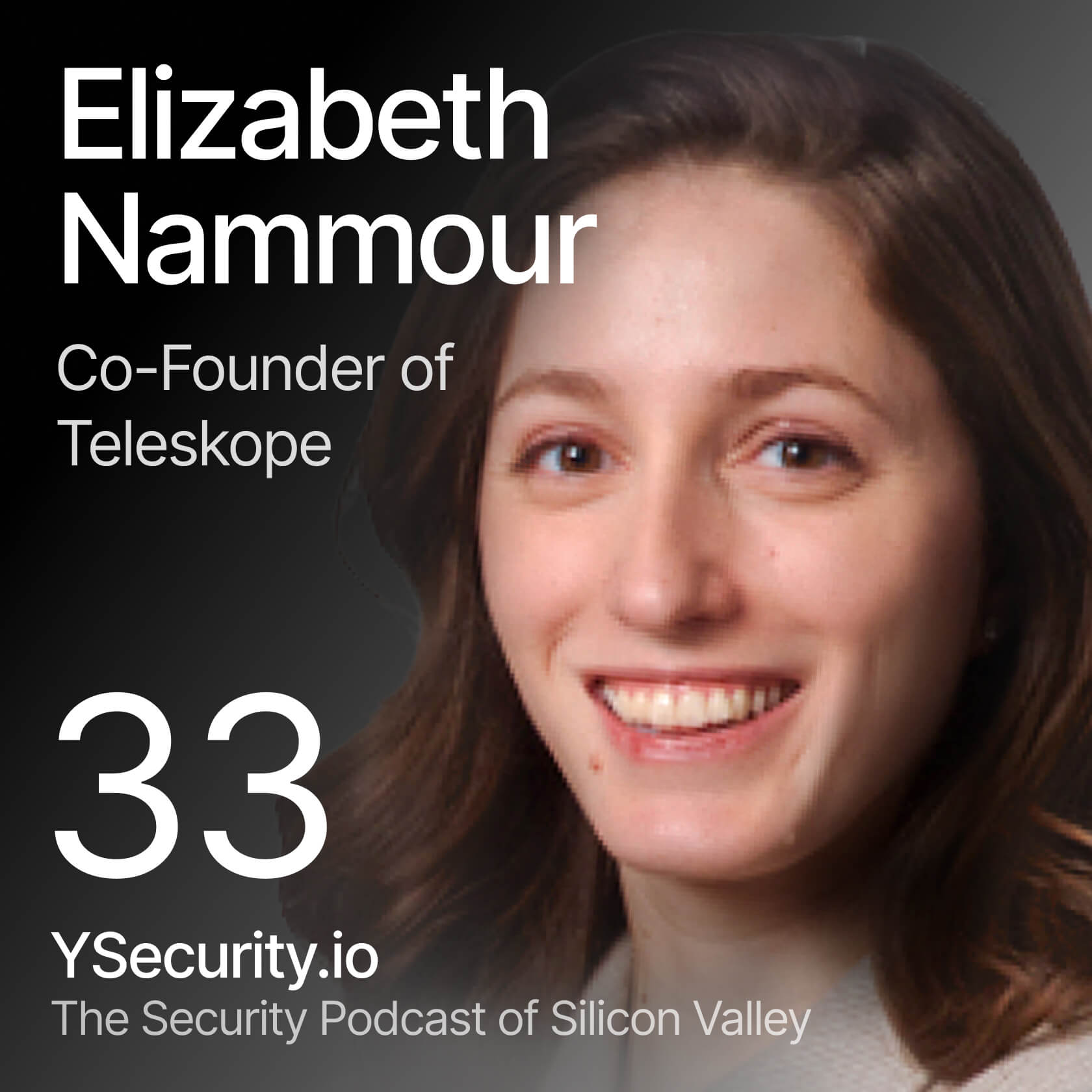
Hello and welcome everyone to another episode of the security podcast in Silicon Valley. I'm here today with a very special guest, Lizzie Namor. Lizzie is the co-founder and CEO of Telescope, cutting edge data security startup. And I'm super interested to hear all about it.
Before then, you were with Airbnb. You were a senior security engineer on the data security team. Yeah, I was. I joined in 2017 and I think it was such great timing just because we were starting to tackle GDPR at CCPA.
And we had nothing built out at that time. So I was able to create something from scratch there. So you felt a lot of pain as you were sledging through some of those requirements and making friends with the lawyers. Yeah, very good friends.
And like the worst thing was like my first three weeks, like my first task was they gave me a dump of like all the columns in the data warehouse. And they're like, oh, please identify PII in all of those columns. Oh, wow. One by one, like manually.
And that was like the biggest pain. I could see where maybe some of the inspiration came from for Telescope. Yeah, exactly. Yeah, definitely.
Even before your time at Airbnb, you had spent some time at Amazon. You were an intern there. Yeah. Not a lot of people can say that.
It was a much more different, very different space. It was like on the Kindle reading analytics team. So it was still related to data, but just not security at all. Very nice.
And you studied computer science at University of Pennsylvania. Yeah. So great college. So much fun and really good learnings.
Honestly, one of my favorite professors, he actually owned like crypto. com. I don't know if you knew that. No, I didn't know that.
We just integrated something with crypto. com. He just sold it two years ago. But at first, he never wanted to sell it because he thought crypto is like for cryptography and not for cryptocurrency.
Oh, he owned the domain and then. Oh, I gotcha. Okay. I bet he made out.
He made a killing. Sure. Yeah. So, hey, it takes a little bit of crazy to get into the security space.
It sounds like you jumped right in right at the beginning of your career. I'm curious, though, was if you go back in time, maybe to like childhood. Is there any like fun stories about what what teased you into the space of security? To be honest, I got into it by chance at Airbnb.
I'm sure I could find like stories from childhood where like I love problem solving. I love like breaking things in order to fix it. And so obviously, like that makes sense for security. But at Airbnb, the way it worked at the time is you would join as a generic software engineer after college.
And the teams at Airbnb that had openings would come and they would pitch to you like these are the problems we're trying to solve. And you got to pick like which team you want to work on. And so that's how I truly got into it. Yeah.
No, that's awesome. I love the honesty, too, because. Yeah. I mean, I wish there was something where I was born.
No, no, it's perfect. I think it's important for folks to know that sometimes we just end up in these really awesome spaces. Yeah. It's serendipitous sometimes.
And before you know it, you're an expert in security. Exactly. It only takes like a few years, I think. Yeah.
Yeah. It doesn't take long at all. And as soon as you get a glimpse of it, sometimes, you know, that's it. You're hooked.
Yeah. It's like you just need to sometimes be put in that situation to realize that, OK, this is what I've been wanting to do. So what do you what do you do at Telescope? So it definitely stems from the work I did at Airbnb and the problems we face.
So we're basically building a modern and AI driven data protection platform to help companies automate security, privacy and compliance at scale and in a developer friendly way. Awesome. And you probably do that better than anyone else in the world. I would think so.
The one that one thing. It's very specific. So the one thing at Telescope that we do better than anyone else, I think truly understand the pain points of being a security or data security engineer better than anyone else because we've actually been there and we've actually solved this problem like at a larger tech company. Whereas I think a lot of our competitors have never truly felt the pain or know what exactly they're trying to solve for their customers.
And so I think that's like that perspective gives us an edge to build a product that truly works in complex environments. And does it cause more headaches on the actual engineers operating them? It sounds like you really fell in love with the problem. Yeah, I did.
And that's perfect because like sometimes people fall in love with a solution and then you cling to it, even though there might be something better that comes along. But if you fall in love with that problem. You try to solve it in the best way possible. Exactly.
Absolutely. Absolutely. And you've been doing this for a year and a half or so now. Yeah.
Yeah. A year and like three months. That's at least like, I was going to say something silly, like three years or four years equivalent of being at a large company. Things go so fast in the startup.
Yeah. And you learn so much, so many different things. Like I've never sold before this. I've never had to sell anything.
I've never had to market anything. And just like diving into that world has been so interesting and like fun, but also like not fun in certain ways. Yeah. That sounds nerve wracking.
Yeah. Nerve wracking, but exciting. Like nerve wracking, exciting at the same time. It is.
Like figuring it out. Yeah. Yeah. You're figuring it out.
Do you have like an advisor that helps you navigate that space? Because it's a very complex, intricate, very intricate space. We do. One of our advisors, he's the COO at Data Theorem, which is another like security company.
And so all he does is like, like his main role is to sell like, and he's like the best salesperson ever. And so we learn a lot from him. But sometimes you have to try and fail and see why you failed and then like fix your strategy and then do it again and again until like something seems to work. Like the wording has to be right.
You have to like ping the right people, like figure out who is your target persona. And that's really hard to do. Yeah. Do you have a favorite book on marketing or on sales?
No. I'm just playing around with it and asking people. I'm much more. This is good.
Yeah. I'm more the type to try and like do things and then learn from that versus like reading books that teach me how to do something. Yeah. That's awesome.
I love that. That's an entrepreneurial spirit, 100%, where you get like good things come out of failures. You get information. It improves.
And it's like little feedback loops. Exactly. And you learn why something doesn't work. Like I think a book could explain, okay, these are the best tactics, but you don't know why like this is better than another one because you haven't tried that other way and you don't know why that other way would fail.
And sometimes like I think it's different for different people and different companies have to use different sales tactics. Even different types of people have to use different sales tactics. Oh, I bet. Because it has to fit your personality and you have to like embody that and you have to wear that.
If you're not convinced, no one else is going to be convinced. Exactly. Exactly. Yeah.
So what's a typical day look like for you at Telescope? So. Is there such a thing as a typical day? No, but like so we go into an office.
We're a team of five people now all based out of New York. So we all go into the office almost every day, which is like I would recommend for anyone having a startup to not do it remotely, do it in person. Makes it like makes it more efficient and makes it also more fun. Like you get to chat with your coworkers every day and like live and breathe with them.
But going to the office, I think that they're around eight. I like to do like my LinkedIn emails in the morning. That way I can do the rest of my meetings during the day. And like because during the day, like I don't get like I get pings by like, you know, meetings or like questions.
So I don't have much time. And then after that, in the afternoon, I code. So I still code in the afternoon. Oh, nice.
You're not afraid of getting your hands dirty. Oh, yeah. I can't. I know.
I can't let go, which is bad. Yeah. Well, it's good and bad, I guess. Maybe.
I mean, if you're only five people, maybe, maybe still good. There's a way, I think, to code where it's more like leadership coding. Where you're building like foundations or you're building interfaces or I don't know, doing get reviews and you're a little bit higher level than just deciding on what library to use and filling in. Yeah.
No, I agree. It's important to like kind of like build out maybe like a big, big, big feature, but not like, you know, extend a feature like by some small amount. Yeah. Right.
Yeah. Yeah. So what would you say the best day has been for you so far at Telescope? I think it could be either like the day we got our first customer.
Like that was very. Oh, that's exciting, isn't it? Yeah. Like they sign on the line and you're like, there's one coming in.
Exactly. And it's so nerve wracking because, you know, the whole legal process takes forever. It does. And you are like, oh, my God, what if it's taking too long and like they don't want to be a customer anymore?
And like you get into your head with all these like scenarios that are not logical at all. But once it's signed, you're like so happy. But another one could honestly be like when we grew the team. So we're two co-founders.
When we hired our first employee, it was also so fun because I've never hired anyone before. You know? Yeah. Yeah.
Yeah. Yep. No, that's that's incredible. I love that.
And now they're like their livelihood depends on like the company doing well, being financially responsible and all. Yeah, that stress is not great, but. But it's exhilarating and maybe one of the best days you've had so far. Yeah.
Awesome. What about the worst day that you've had so far? If there if there has been one. There obviously are like a lot of bad things, like a lot of bad things.
I think the worst one was like really at the beginning when we got our first no from an investor. I think it just the first one hits like the hardest, like not used to hearing no. Now I hear no all the time and it barely affects me. But like the first one is the first one is like a punch.
Like a gut punch. You don't know. Like you keep thinking like, what could I have done better? But sometimes like obviously there's things I could have done better, but sometimes it's also not the right fit.
And like you get to get you get to that perspective after a while. I'm too grateful that you're not you don't have like a board of directors filled with a bunch of. Or fits in terms of your your investors. Yeah, for sure.
So right now we don't have a board, so it's just us. But like our advisors and our investors have been so great and it's definitely like the right fit. So we're like in retrospect, it was a good thing. Yeah, it's one of those things where it's like, you know, when you feel it.
Yeah, for sure. Like even finding advisors for a startup, like you have to click with the person, not just because like on paper they look great. You have to have like chemistry and like, you know, like that you have to be positive dynamic. Something good has to come from those relationships.
Yeah. Yeah. Personality. It is a personality thing.
Like sometimes just don't click with someone and like that's OK. Yeah, you're not going to get like to get the best relationship out of it because you're not like you're not meant to click. Yeah. Yeah, exactly.
Sometimes that happens and it's just important to identify that. Exactly. Move forward. Move forward.
Exactly. So if we are talking about the future, if you fast forward into the future, I'll let you decide like how far into the future you'd like to go. But when you look at that future and you see a smashing success for a telescope. Yeah.
Help us see what that is. What does that vision look like for you? I think like Envision is being the one-stop shop for any type of not just data security, but anything security related. Because everyone knows you have to buy 20 to 100 different tools on a security team and no one likes it.
Oh my goodness. So I think Envision like 20 years from now would be that. But I think five years from now, we do want to be the leading data security and privacy platform out there. Awesome.
Yeah. That's very ambitious and I love it. Yeah. I also love the Envision too, like be the one-stop shop for all things security.
Yeah, that would be so great because then if I know it's obviously hard to be the best at everything, but hopefully one day someone can get there. Yeah. Absolutely. Yeah, absolutely.
And when I put on my chief security officer hat, like that also sounds very good. Simplify a lot of things. Yeah. So many badgers out there.
And you're not paying like 10 million for each vendor. Yeah. That's right. Constrained budgets here.
Life of a startup. Right. Literally. So you mentioned that you recently hired, had a couple new hires.
There are five people now total. So you've done some interviewing. I'm sure you've done interviewing back when you were in an Airbnb. A lot.
Yeah. A lot. Yeah. So I'm curious, do you have a favorite interview question?
I think it depends. Are we talking like coding interview or like just architecture interview or like person? Interview. Oh, I guess all of the above.
None of the above. Like even. Yeah. I would think for coding, like I really like asking a question where there's no real algorithm to it.
It's more like building a data structure and like them interacting with that data structure just because I feel like sometimes you just don't get the algorithm. And that doesn't mean you're a bad software engineer. It just means that it's like in like the hour that you had. But like.
We're human and we don't remember things like Dijkstra's shortest path. Dynamic programming. Yeah. Dynamic programming.
Or what is that? Yeah. Yeah. Graphs.
Like when have you ever had to build a graph like from scratch? Yeah. Anyways. I think I think there's databases known for that, right?
Exactly. So I think that one is my favorite one. I always. For architecture, I really like to keep it like very open ended, like have them describe like a project that they like were doing at the company, like their favorite project and asking them like, what was the purpose of that project?
Like why did they decide to tackle it too? Like so you can see people really understand the why of things and like really cares. I think that's something it shows. Nice.
So connecting like the details of a project to the bigger picture. Exactly. You don't want someone who's just doing something to do something. You want someone to know why they're doing it and like truly.
Yeah. Truly. Passionate. Be passionate about it.
So have you ever been in an interview and you're like, I don't know, notice a red flag or do you have a series of red flags that are like for sure showstoppers or a series of green flags where it's like you'll fight to the death to bring that person on the team? I think like if someone is super curious and asks like why, like, like, for example, if I give them feedback and they ask why and they're curious, like that's always a great green flag. But if they're very like against you or like don't like you or like don't like when you give them a feedback or like tell them like, oh, like sometimes even at Airbnb, like I would try to help them.
I would be like, you know, what if you did something like this? And some people would just completely ignore what I would try to tell them. Like that. A nice little hint and it just gets ignored.
Yeah, exactly. That's like the biggest red flag. It's like, OK, how are we going to work together? Yeah.
So it's about like the chemistry and the communication. If someone listens to someone else. Yeah. Yeah.
If they can listen. And if you're not listening to me in an interview or I'm interviewing you, when are you going to listen to me? You know, that's a good question. I've always thought of like an interview is like that's that person on their absolute best behavior.
So any winning. You'd think so. I mean, I guess everyone has one of those days where it's just like they're not with it or like they're stumbling through a question, but you can stumble through a question and still be an absolutely delightful, pleasant person. Exactly.
Like sometimes, OK, you can perform your best, but that like I think personality, you read flags. So yeah, I always read flags. And one time, one guy, he never turned on his camera and that was also a red flag towards the end. Oh, that's kind of different.
Yeah. Like in the world of COVID where we're all looking remotely and I it's very that's why I turned my camera. Yeah. Like I get it.
Maybe one day, of course, one interview, you don't feel like you're best. You don't want to turn your camera. I get it. But every other time I feel like it's weird or something is off.
Yeah. Yeah. Yeah. Yeah.
It's nice to have like human connection, at least as much as we can, even if we're going to be remote. No, I agree. Because when the camera is up and your camera is on, there's something really it feels really odd. Yeah.
Connect. Yeah. You can connect to it. In fact, I remember when I was doing pictures, I was all during COVID and I would set up the camera and the light on my face and I would put the deck behind the camera.
So it looked like I was looking directly at everybody, even if I was looking at the deck and maybe even reading some notes. Yeah. Yeah. Eye contact is very important.
Yeah. Yeah. No, I think I can get better with eye contact when like on Zoom because it's hard. Like you're looking at your slides and then you're not looking.
It's tricky. It's very important because I think it like it's a very core of what we have is we have trust and insecurity, especially that is all that we have. And as soon as you establish that with another person, if that person is like in an interview or you're trying to sell them something, maybe a new product or something, it's like as soon as that trust is there, you can have a real conversation. Yeah.
And you need to build that trust. Like for an early stage startup, it's kind of hard because people are like, who are you? Like, why should I trust you? Like there's about your company online, like when you first get started.
But like that human connection helps them build trust because they trust you. And so they end up trusting the company. Yeah. That's right.
That's right. Have you ever had any like really difficult questions come in from potential customers that you've answered in a way that you thought really reinforced that trust? Or was it like an uncomfortable answer, but because you answered it that way, they trust you more? I think when you're very honest about the features that you support and the features that you don't, because I think like money and security where people like claim they do a lot of things, but then turns out they don't.
So sometimes when you're just brutally out of say, hey, I don't support that right now, but I could like if you want me, like I could work with you on this feature. But right now we don't support that. They really like that answer because it shows you're not like, you know, trying to sell something. Over committing.
Yeah. Yeah. You're well grounded. Yeah.
Because a lot of people, you can't tell like, okay, do they do this feature or not? Like it's so confusing. You don't know until you deploy and sometimes they don't even run pilots. So you have to buy the tool to only find out that they didn't say what they said.
They didn't do what they said they did. So. Yeah. Yeah.
What's it like to be a female founder in this like overly masculine environment? And and in security, too, I kind of feel like security is overrun by guys. Yeah. Yeah.
Well, it's great. Our team were four women and one guy. So that's really good. Oh, that's awesome.
Yeah. I love that. Yeah. It happened by chance.
It's more like we interviewed so many people and like for like the two women were like the best that we could find. So it's been so great. And as a founder, I think it's tough just because especially with investors, I think less so with customers. But it's very much like a guys club in terms of like personality types that investors click with.
So, yeah, I think like if you have a specific personality, too, like you could be seen as not like they love like people who have like a God complex or like really love like, you know, like flaunting themselves. And I think women are more harsh on themselves. And so that sometimes doesn't come off well when you're talking with an investor because they're used to people flaunting like every aspect of their life. Yeah.
Like peacocking. I call that peacocking. What is it? You know, like when a peacock gets afraid or whatever, the feathers go up and it's just like a bunch of colors.
And you're like, wow, that's really pretty. But you're still just a little bird. Yeah, exactly. And I think women do the opposite where they are so critical on themselves.
And like if they don't know something 100 percent, they won't like say that they know it. Or as like an investor conversation, it has to be like literally the opposite. See, I value that honesty, though. I think that's where the real value is.
Yeah. I think so. I think so. But I'm not I'm not an investor.
I'm not an EC. So yeah, I think if we had a VC on the show and we posed that question to them, all of them would side along the lines of, oh, we prefer honesty. We prefer honesty. But I think I've noticed like what you're talking about myself.
It is. There is a huge aspect of this that it's a little boys club and they all talk to each other. And as soon as you start talking to one, they all all the other ones know about you. So it's a hype thing.
It's all hype. It is. Yeah. It is.
Yeah. I mean, now with the whole Gen AI, like if you're a Gen AI startup, it's so easy to raise money to. Yeah. Well, you have AI in the telescope.
Yeah. We use large language models. So we're definitely playing that card. But yeah.
Well, I think the technology fits, right? You have to identify what type of data is flying around a system. No, it does. And I think I don't think Gen AI is a hype in a bad way.
I think that's the difference between this and other like hypes is that this like the technology is really cool. It's more like how people are like, you know, talking about it is what makes it such a hype. And like it's been here for so long. Like, why are people talking about it now?
Yeah. This month. Yeah, exactly. Yeah.
Yeah. That's that's what causes the bubbles. You know, it's not the technologies themselves. The houses had nothing to do with the bubbles.
It was all about the people. Our perceptions of mortgages. Yes. And what we did.
I wonder if that would ever happen again. I mean, a history unlearned is a history repeated. Yeah, it's true. People forget.
Right. Yes. Yeah. Um, okay.
No, that's that's really interesting. Thank you for sharing. I know it's like a vulnerable space to be in to talk about those sorts of things. But, you know, maybe imagine that there's a young woman out there or a member of minority and they're hearing, you know, an inspirational story from someone who has in their minds like made it.
I know you probably feel like the journey is all in front of you, but I think a lot of people look up to you and say, wow, like, look at Elizabeth go. That's funny because, yeah, I'm looking at other people. I mean, it's important that all of us have someone that we're looking up to it, you know, have goals in line. Yeah.
Sure. Yeah. Would you recommend a book or a movie maybe that you you read or you watched that really left a mark on your soul? Maybe change the way that you saw how, you know, you understand how the world works.
I think this one is tough. I like I was just thinking about this earlier today. I think like my favorite movie ever would be Shawshank Redemption, even though I know that's like a cliche answer. Everyone loves it.
I think that's a cliche answer. That's a really good movie. But everyone agrees that it's good. You know what I mean?
Yeah. Yeah. I don't think I'm like saying something so revolutionary, but maybe it's not controversial. Exactly.
Hopefully not like too controversial if it is controversial. I wonder if someone hates that movie. I would be surprised. There's probably people out there that hate that movie.
I hate that movie. But I really liked it because it really shows like how like important optimism is and like hope is and like, you know, even they're in like the most dire situation and there's still hopeful. At the end, everything kind of works out. So I really like that's why I feel like a lot of positive energy and an ability.
It feels like we're both afflicted with the same, you know, mental condition of no matter what is happening around us. Like we can find that silver lining and we can see the good coming out of the situation. Yeah. I mean, I think it's so important because if not, if you're always thinking about the bad, you're never going to be happy ever.
Yeah. I guess. Does happiness get tied into how we see the world? Yeah, it does.
Yeah, I'm sure. It absolutely does. Yeah. Isn't that what like meditation tries to teach you is like changing your perspective on like things that are happening to you.
Yeah. Yeah. I think there's like lots of different types of meditation. One of them is like, um, like how to, how to become an observer and just observe what's happening and because you're not the action taker.
You're not. Yeah. Yeah. Right.
Right. Instead of like feeling the emotion and then engaging like with anger, for example, like feel the emotion, feel it all the way through, but then ask yourself the question, like, why do I feel? Yeah. And that way you feel anger a lot less.
Like you do. You do. And it becomes like, not this like overpowering, overbearing sort of thing. It just becomes like data.
It's a signal. It's a signal. It's a signal about like what's happening around you and whether that's aligned with your values. And if it's, if it's violently misaligned with your values, you may feel anger.
Yeah. And then like in that case, like it's telling you something and you take action, but you're not like drowning in that feeling for days and days and days. Yeah. Amazing.
Yeah. I think optimism also comes from like, I think all Lebanese people are optimistic just because like from the country's perspective, you have to be. So I think like that's definitely why I have. Did you grow up in Lebanon?
Mm-hmm. What was that like? It was like, it was really good. Like I, I, I really like it.
I don't think I could see myself living there nowadays because like the whole economic situation is weird. But it's funny because at the time when you're kids, it's more of a danger in terms of like physical danger. Like there might be like a bomb somewhere. You know what I mean?
Right. Now there's no longer. Or AK-47s going off like in the corner of the street. Now there's no longer that danger, but now it's more of like an economic danger.
And so that made the country way worse than like people are way more unhappy than they were during the war. Yeah. Wow. That's, that's an interesting.
Crazy. Spin. Yeah. I had someone else on the show.
Um, David Gurley. Okay. He spent a lot of time in Lebanon and I remember. How come he, his family was moving around and they spent a lot of time in Lebanon and, and he said he was actually French, but for whatever reason, he grew up a good chunk of his childhood in Lebanon.
And he remembers, he recalls like hearing gunshots and, and meeting people that were very angry with another group of people. And he didn't understand why, cause he was just a child. Yeah. And he developed a strong sense of like empathy.
Um, because of that, because of that. Cause at the end of the day, we're all human. And he could see that. You could see that as a child, right?
We're very innocent and we're not indoctrinated with all this us versus them crap. And, but it is very much us versus them in those types of countries because like what that war that like kind of represented two religions, like it's hard to take someone outside of that mindset of us versus them because it was that way for like 30 years. So it's really hard for like people who lived through that war to not see it that way. But for us, like the new generation, like it's like, why do you still feel so much hatred for a different group of people?
You know what I mean? Cause yeah. Right. Right.
And right behind you, I feel like I have to share this with our listeners. We're not going to get the visuals. It says make art or. Oh yeah.
I love it. Good. It's beautiful. It's like so pertinent too, to our discussion.
Yeah. It's not mine. I'm in an Airbnb, so. But I do like it.
Yeah. It's perfect. It's a really good backdrop. So if you could go back in time to your younger self and you could offer your younger self a bit of advice or a bit of wisdom, what would that be?
I think it's to not be overly stressed about like the next goal. Like I can remember like how going to like the best college was like the biggest stress of my life. Like, you know, like getting all these A's and like now looking back, like, did it even matter? Like, it's not.
You know what I mean? Like you're always so focused and stressed about achieving the next goal, but it's going to happen. You're going to achieve that goal one way or another. So there's no point in like being so stressed about that.
Yeah. That's a good attitude to have. It sounds like you overcame like a strong sense of like imposter syndrome. For sure.
And it's more like, OK, like I'm getting all these A's. Like, obviously, it's important to study and like do so well. But like being so focused on just those goals, not like, you know, not. It's not maybe not healthy.
Yeah, exactly. Yeah. Yeah. And being stressed about the worst case scenario, like what if I don't get into college?
Like that obviously was not going to happen. So I don't know why I kept thinking about that worst possible scenario. Yeah. Well, it feels like you've come a long way since those feelings.
Yeah. Yeah. Yeah. It's great.
I don't know. Look back and reflect on how much we've grown over the years. For sure. Yeah.
Yeah. It's crazy to see how you've changed since you were a kid. Yeah. Would you say like a telescope has really like helped you grow as well?
Definitely. You just become OK with so many things because like you always get no's like with you know what I mean? Like, yeah, I just I was so against like, for example, I could never have imagined me cold outreaching someone like sending a message to someone on LinkedIn without knowing them. But now I do this all the time.
I don't have a barrier. I bet you don't even think about it. It's just like a template, a spreadsheet. Out they go.
It's personalized. Like I like, yeah, I like messaging. It's not like, you know, sending masks. But before I was just so afraid, like, oh, I'm bothering them.
But no, no. Yeah. So do you have a top down go to market strategy? So right now it has to be like top down when you're such early stage.
But eventually we don't want to have a bottoms up on top of a top down. And so basically have like developers and security engineers try out the tool, like use the tool, have a freemium approach and then try to sell like the bigger platform. Very nice. So if I want, if so, if I wanted to try this out, what would you recommend that I do?
If you wanted to tell us, go out. Yeah. First step would be to schedule a demo right now so that we could show you the whole tool and then we can set things up with you. You can set your environment.
Yeah. Awesome. It sounds very easy. Yeah.
And this tool would solve the problem of like understanding what types of data I have and which systems and how to become like GDPR compliant or CCPA compliant or HIPAA compliant. And we actually help you like remediate the issue. So like fix those misconfigurations or non-complications. But our true power is that we're really developer friendly.
So all of our insights, you access them via APIs so you can build your own security and privacy controls. Oh, nice. Because a lot of times it's very customizable within a company. Like I can't build things out of the box for you because you're using internal systems, internal services, and having that flexibility to like build your own thing on top of us is really important.
It sounds important. It sounds like you're going after pretty big-sized customers too if they have their own internal tools that they want to inject your data into. Into, exactly. Yeah.
Yeah. That way you're not like another tool that doesn't communicate with the other tools they're using. They can actually plug you in. Is there like a SaaS component to the tool?
Is it 100% on-prem? So it can be single tenant SaaS or on-prem, whichever you prefer. Nice. Okay.
Single tenant SaaS. That makes me feel very secure. Exactly. At least like segregated from all of the other like things that are in the cloud.
Yes. And that way like there's like a whole network, yeah, network creation. Like you only allow access for one customer. It just makes it way more secure and way more easy to manage.
So don't feel obligated to answer this question. Okay. But do you mainly compete with like Drada in Bonnet? No, not at all.
No, not at all. Oh, okay. Yeah. No, I think we're more like we have synergies with them.
So they help you with like the policies. Like they tell you what you need to do, but they don't tell you whether you're actually doing them or not or how to fix them. Like engineering's perspective. And so we go ahead and we help you from the engineering perspective.
So we can tell you these are all your databases that have PII. So you could upload that onto Drada because that's a question that GDPR or even Stock 2 asks you. It's like where are you storing sensitive data? And oftentimes no one knows the answer to that.
Yeah, I've been in large enough companies where nobody knows. And then you get databases, mystery databases that show up. And sometimes they have broad data in them because a developer wanted to do the right thing and test and test against like pretty good data. Yeah, or they copied it like for one day.
Copy it from Pro. Yeah, exactly. And just leave it by accident. Yeah.
It's so easy. Exactly. Like to just like forget. And then like if you have 10, 000 engineers, how are you going to keep up?
And then everything has backups and backups of backups. And the data goes flying around all over the place. And then you have 10 different, like you have three different clouds, like 10, 000 different vendors, like SaaS providers. So may I ask, like, how does it gain visibility into like databases and where the data is in a complex, like large application?
So basically, yeah. So, I mean, the big vision is that we could discover, for example, AWS accounts automatically. So by plugging into your like emails or like billing software to be able to figure those stuff out and figure out which vendors you're using as well. But now all you need to do is just give us like an IAM role and we're able to discover everything within that account.
So everything within that AWS organization. Awesome. So like it just like crawls around. Crawls everything.
Yeah. Like almost like a training to check GPT thing, but on data, it's security data. And it's all yours. And so the result is also all yours with one of these single tenant SaaS instances.
Exactly. And then it also makes it easy. Like if the company wants us to destroy their data, like it makes it so much easier for us to just confirm that we can delete all of their like, you know, the metadata that we store if it's single tenants. Yeah.
Yeah. I love that. Yeah. That sounds really safe.
Yeah. I've certainly seen companies that have had this problem. I don't think I've ever been in a large company that has not had this problem. Yeah, exactly.
I think any company that has over, I think, 150 to 200 employees, like when they're starting to figure out what they need to do, even for compliance, we can help like even like those, make sure those controls are all in place like from an engineering perspective. So you don't have to waste your time doing that. Yeah. Awesome.
Yeah. Awesome. No, that sounds very far. Yeah.
Super, super easy to set up. Yeah. I think one of the barriers to entries of all these different vendors is like the sludge that you have to run through to get like these vendors set up. But even if you want to do a little POC, it's like a ton of work.
Sometimes it takes like a month or that's optimistic. And for me, like, okay, you're talking about a month and that's optimistic, but I'm counting even like 30 minutes is like a sludge. Like too much work. Too much work.
No, 30 minutes. Forget it. Forget it. Especially for a POC.
What was like the worst like onboarding experience you had? I think all, um, it was just horrible because it just kept going on and on and on. And then I ended up being their QA and I, I don't have the hearts to name the company, but it's a very, very popular name. Okay.
It was just horrible. And I was, I had, I, I had agreement and alignment with the C-level executives to move forward with this. And I was like, look, we need all of these protections here. Yeah.
This is like the standard in the industry. Like, let's just do it. And I was like, okay, shut up and take my money and like, give me the install script or whatever. And they gave it.
And like, nothing worked. Just nothing worked. And I was like, what is this? And we ended up not doing the deal because of the onboarding experience was so horrid and we had to move fast.
Yeah. And it turns out there's a lot of like open source alternatives. So. Just deploy yourself.
If you just deploy yourself, it actually worked and had strong sense of community back behind them. Didn't have to be other people's QA and all sorts of stuff. I would not have expected that. I did not expect that.
They were small at the time. They were huge. This is recent. I think the larger the company, the harder it is for the company to like maneuver and fix bugs that it has within itself.
And the least innovative it's going to be. Yeah. I would hope an install is going to work. You would hope the install would work.
I get everything else. But like the install, like that should be the only thing that works. You know? That's like the most important thing of the whole deal.
I agree. Here, take the money. Here's the install script. Go.
You know? Exactly. It did not work. That's so funny.
What did they say when you said you no longer wanted to move forward? Well, I just said like, I'm not going to be your QA and you guys have to go figure out this bug. And they wanted me to post like a whole bunch of logs from a giant system that we had. And I looked at the logs and it had like all this other data in it.
That, you know, that I couldn't share with them. And I was like, no, this is not going to. I'm not giving you this. I can't give you this.
Like this is too much. So go, go, go figure it out. Go reproduce it. Here's how to reproduce it.
They kept coming back to me with like requests to do this and try that. And can I see the logs? And I was like, no, you can't see the logs. I mean, that's the issue with sometimes on-prem is like if there is a bug, like you're going to have to do a lot of like hand-holding to help them face it.
That is true. Yeah. That's very true. Whereas with Sass, you could see the bugs yourself, but I don't know if like they would have been able to.
So, hey, we have a lot of entrepreneurs that listen to this thing. And I always like to ask this leading question. Is there anything that any pain point that you feel that you wish someone would just step up to the plate and fix and solve and like go build a company around? A hundred percent.
I think documentation needs to be fixed because I truly believe that engineers and like are not going to update them or even write them in the first place. So if there could be something that like basically crawled the code and then wrote the documentation for it automatically. Like now I think with the new like instances of AI as well, I think that definitely is possible and that would solve like all the pain points. So many problems.
That's such a good idea. I love that idea. Yeah. Someone please don't build that.
No one's going to update their documentation. Maybe they'll write it once, but then if they change something, they're not going to update it. Like, yeah, unless they're like very nitpicky around like documentation, but if not, they're not going to update it. This reminds me of an engineer that I work with at Symphony Communications and someone asked him about the documentation of his code once and he looked at this person and he said something along the line.
He scoffed. He's like a grumpy old man look and he scoffed at them and he said, the code is the documentation. It's like, okay, that's silly and true at the same time. And maybe now with this tool, like we could actually get something human readable.
Was his code that well written that like it's so readable? He wrote pretty good code, but I also sympathize with the person who just didn't want to read the code. Yeah. And because I was one of the people who didn't want to read the code and I just wanted to see the documentation.
Like, hey, there's an API here. I know there's an API. I don't want to reverse engineer like how you stood up the server and then like open a port and then like connect a router to it. And then, oh, here's your endpoint.
And then here's the post. And, you know, like seriously. Just let me know what goes in and what goes out. Exactly.
What is the contract? What is the contract that this thing has with the rest of the world? Yeah, exactly. So, yeah.
An AI that scans code and looks for contracts and publishes those. That would be very cool. Because right now, even like with like I know there's like Postman, like you can write. Yeah.
I forgot what it's called. This library that you can install that like will generate the documentation for you. But you have to be super explicit like in the comments that it's like it's basically. Oh, here it is.
And here's the inputs. And it's not reading the code. It's reading your comments. Yeah, exactly.
Like Swagger or something. Yeah, Swagger. Open API. Yeah.
All of these great tools. Yeah. Like it's great, but it doesn't solve like the true problem, which is like people don't even want to write that in the first place. Yeah.
That's right. That's right. Yeah. Well, Lizzie, it's been absolutely amazing.
Thank you so much for joining me on an episode of the Security Podcast in Silicon Valley. Thank you for having me. Would you like to leave our listeners with any words of wisdom? Words of wisdom?
I'm on the spot. I don't mean to put you on the spot. Like we can save this for the next round. You know, when you're the CEO of a large unicorn startup and on your way to.
Knock on wood. Knock on wood. Knock on wood. Yeah.
Yeah. There we go. Yeah. I mean, I think like definitely like, yeah, just keeping the optimism and just keep pushing through because I think the reasons why like startups fail is because like you give up.
Like, you know what I mean? Like you can always. That's the only reason they fail. That's the only reason.
I heard the same. I heard this one saying once. It was like. I've heard a couple of funny sayings, but like the serious one was that a founder is the first to know that something is going to fail and the last to believe it.
Oh, exactly. Because you're always like, OK, we know in the solution. Like, you know, always find the solution. You can always find the solution.
There's always like a way for the obstacle. The other funny saying that I've heard before is like it's for the Bay Area folks, which is 101 was made for founders and 280 was built for the VCs. Wait, why? I don't get it.
Well, because 280 is a beautiful road and it's like smoothly paved and there's rolling hills and there's no traffic on it ever. And 101 is always a crapshoot. OK. With potholes and like.
Yeah. Like the VC lifestyle, founder lifestyle is so different. It's so different. Why is it so different?
All right. So different. Yeah. It's really funny.
OK, well, thank you for all of our listeners for tuning in to another episode of the Security Podcast in Silicon Valley. And thanks. And thank you to Elizabeth, too. Thank you so much for having me, John.
No, thank you. You're welcome back on anytime. Thank you. Thank you.
Thank you. Thank you. Thank you. Thank you.
Thank you.

This episode covered SOC 2.
YSecurity helps teams get audit-ready without slowing the roadmap, from first scoping call to clean opinion.
Talk to YSecurity