What Is Deep Tech? Why the Hardest Startups Can't Be Built in a Weekend
What is deep tech, and why does it take decades instead of a weekend? A cryptography founder explains the cumulative knowledge and timing it demands.
What Is Deep Tech?
Deep tech is technology built on a hard scientific or engineering breakthrough, not on assembling parts that already exist. Quantum computing, advanced cryptography, novel materials, fusion, robotics, and synthetic biology all qualify. The defining trait is that the core advance has to be invented and proven before there is a product to sell.
That makes deep tech a different animal from a typical software startup. BCG research found deep tech ventures take roughly 25 to 40 percent more time between funding stages than other tech, that about 70 percent own patents, and that around 83 percent are building a physical product. Deep tech also grew to about a fifth of all venture capital over the past decade, so the category is large and growing, not a fringe.
Episode 96 of The Security Podcast of Silicon Valley is a live case study. Host Jon McLachlan (co-founder of YSecurity and Cyberbase.ai) talks with Kevin Kane, co-founder and CEO of American Binary, which builds post-quantum cryptography. Kane's company is the software exception to the hardware rule: deep tech where the breakthrough is mathematical, not mechanical. The lessons, though, are the same ones every deep tech founder runs into.
Why Deep Tech Can't Be Built in a Weekend
The hackathon model, where a small team assembles existing tools into a working product over a weekend, is the opposite of how deep tech gets built. The whole premise of deep tech is that the core technology is not sitting in a package manager waiting to be imported.
Kane put a number on it. "Tech nowadays, especially in our area, it's to the point where you need 20 years of cumulative knowledge to do something like we're doing," he said. "You can't wing it on a weekend or at a meetup with some friends and hack this."
That cumulative knowledge is the real moat, and it is also the barrier to entry. It cannot be raised in a quarter or copied from a tutorial. It is built one hard problem at a time, often across a career, which is why deep tech teams tend to look more like research groups than growth-stage product squads. The advantage compounds slowly, and it is hard to fake.
Timing Beats Thesis: Starting Before the Market Is Ready
Most startup advice treats market timing as a matter of having the right thesis. Kane is blunt that a thesis without execution is worthless. "Theses are meaningless if your trades aren't executing exactly where they need to be," he said, drawing on his earlier life in systematic trading. Following the crowd, he argues, gets you the crowd's result. Real conviction means being early on something the market has not caught up to yet.
For deep tech that creates a hard problem. You often have to start years before the demand is obvious, because the technology itself takes years to mature. "When we started this company, the time was not here, and it wasn't here two years ago," Kane said. "It's starting to come here now." His worry is the opposite of being too early: "If you wait too late to start, you're not going to catch up."
That is the founder's bind in deep tech. Start too early and you burn capital waiting for the market. Start too late and the cumulative-knowledge gap means you never close the distance. The same scoping discipline that separates winning AI adoption strategies from the projects that fail applies to timing a deep tech company: the bet has to match the moment, not just the slide deck.
The Long Road of Debugging What Doesn't Exist Yet
The part founders underestimate most is debugging. When your technology has never run anywhere before, every failure is a new failure. There is no Stack Overflow answer, no vendor support line, and no one who has hit the same wall.
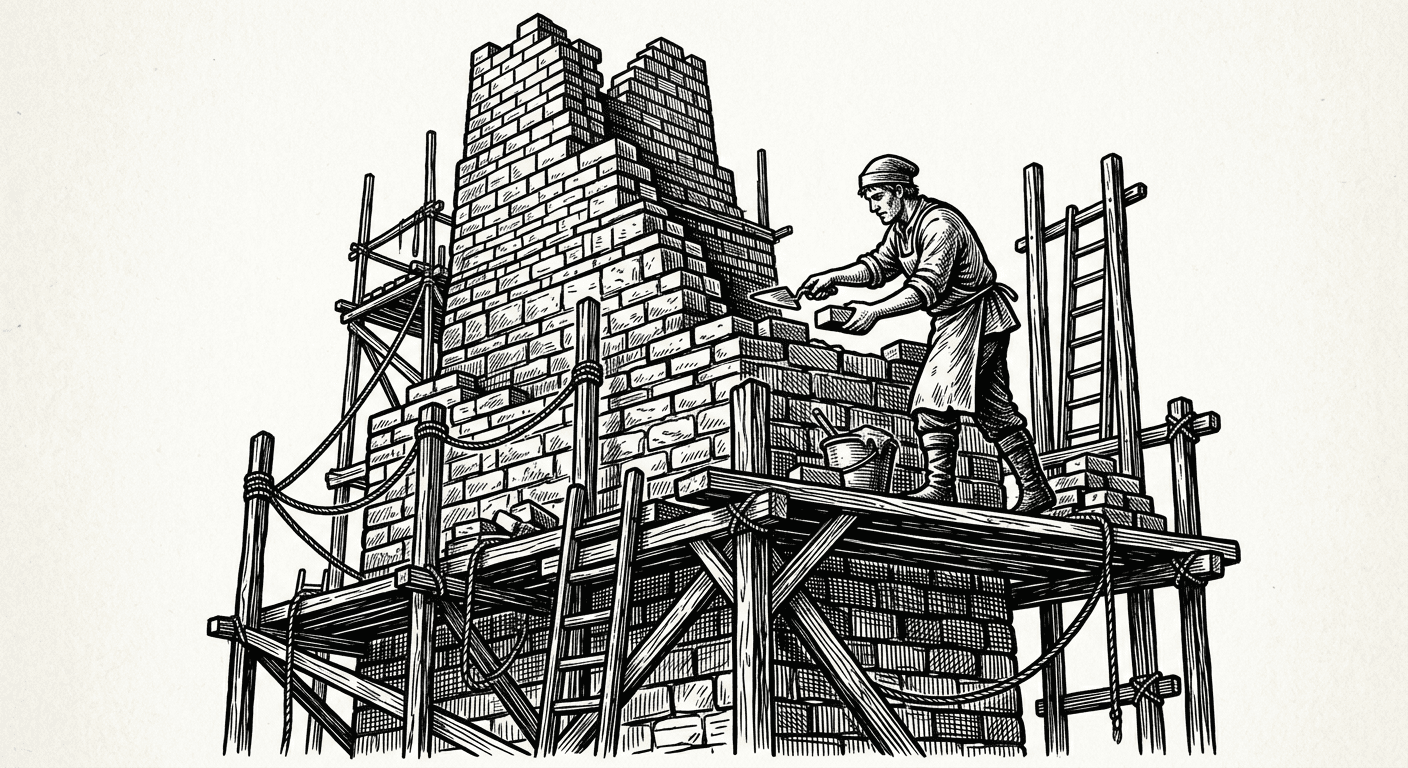
Kane described years spent chasing a single root cause. "It took us years of finding out what was wrong with our systems when they weren't working in the real world," he said. "We were having a problem handshaking, which led us to developing a lot of solutions around our key exchange. But we didn't know that that was the issue. There's such a long road on learning what's going wrong with software that is new, doesn't exist in the wild, except for what you built."
This is where deep tech timelines actually go. Not into building features, but into discovering why something that should work does not, in a system no one has mapped. A founder building a cybersecurity startup on known architecture can lean on patterns others have proven. A deep tech founder is often writing the pattern. The cost of that is paid in time, and it cannot be rushed.
Earned Authority: Why Conviction Beats Crowd-Following
Deep tech forces founders to defend ideas that established experts may not accept yet. Kane's answer is that authority has to be earned through proof, not borrowed from a title or a brand.
"To be able to speak with that authority, which was earned, is an incredible thing," he said, describing how his team now challenges well-known cryptographers directly. His metaphor was the three little pigs: "We built a brick house, and we didn't build a hay house." The point is that conviction only holds up if it rests on something solid. American Binary's claims went through private peer review and formal verification before Kane was willing to argue them in public.
That sequence matters for any hard-tech founder. Conviction without proof is just confidence, and the market eventually tests it. Conviction backed by verification is a moat. It is the same reason credibility in building a defense tech startup comes from working systems rather than louder claims. In deep tech, the work has to vouch for you before you can vouch for the work.
What Deep Tech Demands From Founders and Operators
The personal cost of all this is real, and Kane was direct about it. Deep tech rewards a high internal standard held over a long horizon, and that standard shapes who can stay on the team. "As we scale, I'm going to insist that on people," he said. "It's going to filter a lot of people out."
A few of his hard-won lessons translate beyond cryptography:
Hold a standard you will not break, even when it costs you. The technical bar and the personal one are linked in deep tech, where shortcuts surface years later as failures.
Do not postpone happiness until after the win. Kane's advice to his younger self was to "integrate it into your work now," not to wait five years to be happy. Deep tech horizons are too long to defer a life against.
Take help from people you do not click with. He learned that useful support often comes from people you would not pick as friends, so guard your standards without writing people off.
Match accountability to the seriousness of the problem. Kane talks about facing hard problems himself rather than hiding behind an institution, so the responsibility lands where the decision does.
None of this shortens the road. It makes the road survivable. Deep tech is a long game with a small number of turns, and the founders who last are the ones who can hold a standard and a life at the same time.
Listen to the Full Episode
In episode 96 of The Security Podcast of Silicon Valley, Kevin Kane, co-founder and CEO of American Binary, returns to talk with Jon McLachlan about building post-quantum cryptography and the founder lessons that come with deep tech.
Kane is unusually candid about the parts most founders hide: the years lost to debugging the unknown, the discipline of starting before a market is ready, and the personal cost of holding a high standard over a long horizon. His framing of earned authority, conviction backed by proof rather than volume, is worth the listen on its own.
It is a strong episode for any founder or operator working on something hard enough that there is no playbook for it yet.
What is deep tech?
What is an example of a deep tech company?
Why is deep tech so hard to build?
How is deep tech different from a normal software startup?
Security as a growth engine, not a tax
Submit a Security Request
Meet the hosts